

It’s 6:45 a.m., and a route driver is already on their third stop of the day. They’ve got a full truck, a tight schedule, and a paper checklist that’s already smudged from the morning rain. At the last store, the endcap display never got built because there wasn’t time, and the cooler is two facings short of where it should be. By the time anyone finds out, the weekend’s promotional window will have already closed.
This is the reality of direct store delivery (DSD) done without the right tools. And for the brands and distributors that rely on it, the gap between a smooth DSD run and a costly one comes down to what happens at the shelf.
Key Takeaways
- Direct store delivery bypasses the retailer’s distribution center entirely, putting brands in direct control of how their products reach the shelf
- DSD grocery operations are ideal for high-velocity, perishable, and time-sensitive categories like bread, beverages, and snacks
- The biggest risk in DSD operations isn’t logistics, but execution
- Mobile task management and guided workflows are transforming direct store delivery, giving brands real-time visibility into shelf conditions and ensuring reps execute correctly at every location
What Does DSD Mean in Grocery?
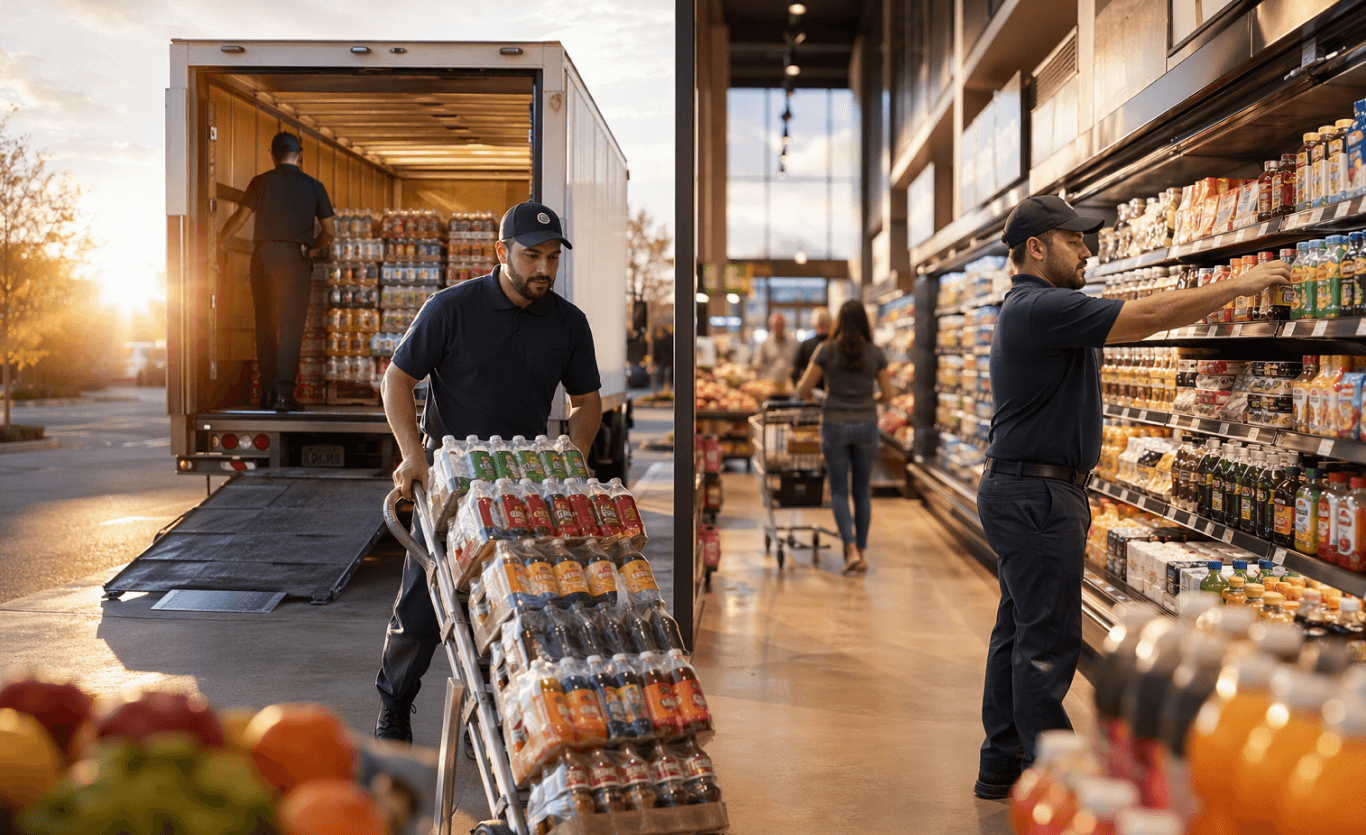
Direct store delivery is a distribution model in which a brand or manufacturer delivers products directly to a retail store, bypassing the retailer’s distribution center entirely. Rather than routing inventory through a central warehouse before it reaches the shelf, a route driver delivers straight from the manufacturer’s facility to the store—stocking shelves, building displays, and managing inventory on the spot.
In most traditional retail supply chain models, the retailer’s distribution center controls the flow of goods before they reach individual grocery stores. With direct store delivery, that control shifts to the brand, which means bearing the labor costs of in-store execution, but gaining direct visibility of how products are presented at shelf level.
The typical DSD workflow moves quickly:
- The manufacturer’s warehouse picks and loads the delivery for each route stop
- The route driver arrives at the store, pulls the delivery, and checks in with the store staff
- Stock is rotated on shelves and in coolers using FIFO principles, with older product moved to the front
- Displays are built or refreshed, promotional materials are set, and compliance is verified
- The driver logs the visit, captures any required reporting, and moves to the next stop
For grocery retailers, this model is highly attractive because it transfers the complexity of replenishment to the supplier, helping reduce costs and store personnel burden at the same time. For brands, it’s an opportunity to control their shelf presence directly—but only if their route teams execute consistently across every stop.
Why DSD is Critical for Key Grocery Categories
Not every product category is suited to direct store delivery. For categories with short shelf lives, frequent replenishment needs, or complex merchandising requirements, DSD helps maintain availability, freshness, and in-store execution.
The Freshness Factor
Categories like bread, baked goods, and dairy have shelf lives that centralized distribution centers simply can’t accommodate at scale. Direct store delivery solves this by shortening the journey from manufacturer to shelf, delivering tangible benefits for both brands and retailers:
- Maximised freshness windows that keep fresher products in front of consumers
- Reduced spoilage and waste across high-turnover grocery items
- Stronger consumer loyalty built on consistent product availability
High-Velocity Replenishment
Fast-moving categories like beverages and snacks move too quickly for centralized distribution centers to keep pace. Frequent deliveries through a DSD operation ensure shelves are replenished before gaps appear, protecting profit margins and avoiding the lost sales that empty shelves create. For brands in high-velocity categories, better product availability is the difference between winning and losing at the shelf.
Brand Control and Customer Relationships
When inventory management sits with the DSD supplier rather than the retailer, brands gain something centralized models can’t offer: direct oversight of how their products are represented in every store. Route sales reps handling delivery and execution can:
- Verify placement and maintain displays on every visit
- Flag compliance issues before they compound into lost sales
- Build stronger customer relationships with store staff over time
For brands competing across multiple grocery stores, that greater control is one of the most valuable strategic advantages the DSD model provides.
The Operational Challenge: Where DSD Fails at the Shelf
The DSD model places enormous responsibility on the route driver. They’re the brand’s representative, inventory manager, merchandiser, and compliance checker—all at once. When the right support and tools aren’t in place, that burden creates predictable failure points that quietly erode the value of even the strongest direct store delivery operation.
The Route Rep Burden
DSD operations live and die by the execution of the route driver. They cover multiple store stops a day, each with its own inventory management requirements, display standards, and promotional commitments. This leaves little room for error. Yet many route sales reps are still navigating that complexity with paper-based checklists or legacy systems that slow them down rather than support them. The job gets done, but rarely with the consistency that grocery stores and brand standards demand.
Phantom Inventory and Blind Spots
By bypassing the retailer’s distribution center, DSD creates a visibility gap that centralized models don’t have. Accurate stock levels recorded in a system don’t always reflect what’s actually on the shelf, which leads to phantom inventory situations where a product appears available but isn’t. Without real-time digital shelf intelligence, these discrepancies go undetected between visits, damaging product availability and consumer experience at the worst possible moments.
Merchandising Non-Compliance
In-store merchandising is one of the highest-value activities a route rep performs, and one of the hardest to verify at scale. Tracking whether promotional displays are correctly built, pricing is accurate, and off-shelf placements like endcaps are properly executed across dozens of DSD accounts is nearly impossible without structured reporting. When compliance slips, profit margins and lost sales follow.
How Mobile Task Management Transforms DSD Execution

The operational challenges of DSD aren’t solved by working harder—they’re solved by working with better tools. Mobile task management gives route sales reps the structure they need to execute consistently across every store stop, while giving leadership the visibility to know it’s actually happening.
Guided Workflows: Get In, Execute, Get Out
Paper checklists and legacy systems slow DSD operations down and leave too much room for inconsistency. Digitised, step-by-step checklists and mobile workflows replace them, guiding route drivers through every delivery location and ensuring nothing gets missed at any stop:
- Standard operating procedures built into repeatable, dynamic mobile workflows
- Guided task sequences that ensure merchandising, promotions, and inventory management are completed in the right order
- Conditional logic that adapts workflows dynamically based on what a rep finds at each store stop
Closing the Loop with Real-Time Photo Reporting
Without visual verification, there’s no reliable way to know whether a rep’s visit matched brand standards. Real-time photo reporting closes that gap:
- Field supervisors and HQ gain instant visual verification of in-store execution
- Photo libraries are automatically organised by store, location, and campaign
- Regional stakeholders can filter and act on shelf conditions as they happen, rather than days later
That shift from assumption to verified evidence is increasingly non-negotiable for brands serious about DSD best practices.
AI and Image Recognition for Faster Shelf Audits
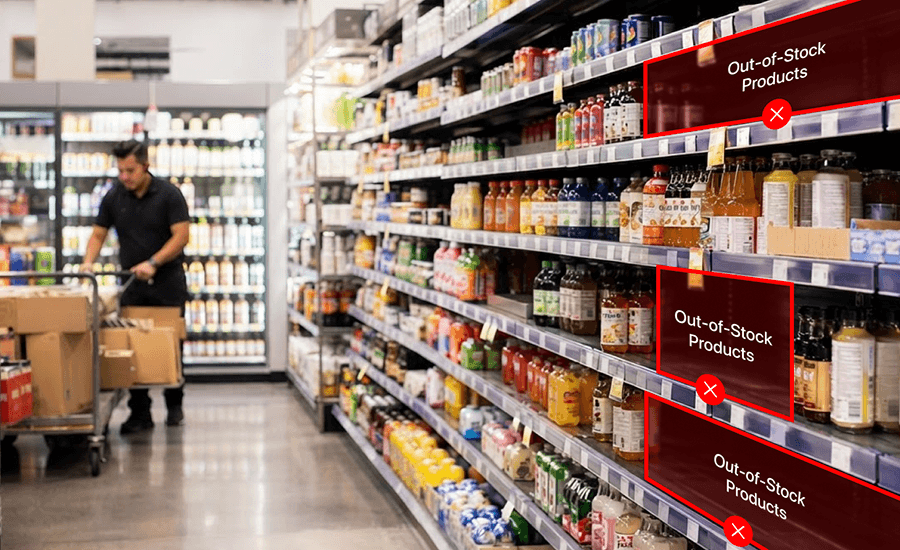
Manual shelf audits don’t scale across a full DSD territory. With AI image recognition, a single photo of a beverage cooler or snack aisle is enough for tools like GoSpotCheck by FORM to automatically detect out-of-stocks, voids, and merchandising non-compliance in real time, with no manual counting required.
The results speak for themselves:
- Shelf audit times reduced by up to 75% compared to manual counting
- Dramatically higher data accuracy across DSD accounts
- Reps freed up to focus on customer relationships and sell-through rather than admin
For DSD teams covering multiple stops a day, that efficiency compounds quickly into a genuine competitive advantage.
Empower Your Route Teams and Maximize Shelf Performance
In a crowded grocery retail environment, the brands that win at the shelf aren’t always the ones with the widest distribution, but the ones whose route teams execute flawlessly at every stop. Direct store delivery gives brands the proximity and control to make that happen, but the right mobile platform ensures they actually do.
GoSpotCheck by FORM for DSD teams bridges the gap between direct store delivery and perfect merchandising compliance, and gives route teams the guided workflows, real-time photo reporting, and AI image recognition they need to execute consistently across every store in their territory.
Ready to elevate your frontline execution strategy? Book a demo today.
Frequently Asked Questions
How do DSD suppliers typically manage relationships with multiple retail partners?
DSD suppliers managing multiple retail partners usually assign dedicated route sales reps to specific territories or store clusters, ensuring consistent customer relationships are built at the store level over time. Contracts with grocery stores and retailers often outline specific merchandising standards, delivery frequencies, and compliance expectations, meaning route reps aren’t just making deliveries but are actively maintaining a commercial partnership on every visit, as well.
What are the biggest cost considerations for brands running DSD operations?
While direct store delivery offers significant benefits in terms of shelf control and product availability, it transfers real operational costs to the brand. Labor costs for route sales reps, vehicle and fuel expenses, and the technology needed to manage DSD processes at scale all factor into the equation. Brands evaluating the DSD model need to weigh those costs against the profit margins gained from tighter execution and reduced reliance on the retailer’s distribution center.
How is technology changing DSD operations?
The biggest shift in DSD operations is the move from paper-based processes to mobile-first execution platforms. Route sales reps now use smartphones and tablets to complete guided workflows, capture photo verification, and submit real-time audit data, which replaces manual reporting that was slow, inconsistent, and difficult to act on. As consumer demands and retail complexity continue to grow, technology is becoming the primary driver of DSD best practices across the grocery industry.
Can small or mid-size brands benefit from a DSD model?
Direct store delivery is often associated with large manufacturers and national brands, but smaller companies can benefit significantly from the model, as well—particularly in regional grocery markets where customer relationships and product freshness are strong differentiators. For smaller brands, the DSD model offers a way to compete on shelf presence and consumer loyalty without the scale needed to negotiate favorable terms through centralized distribution centers.