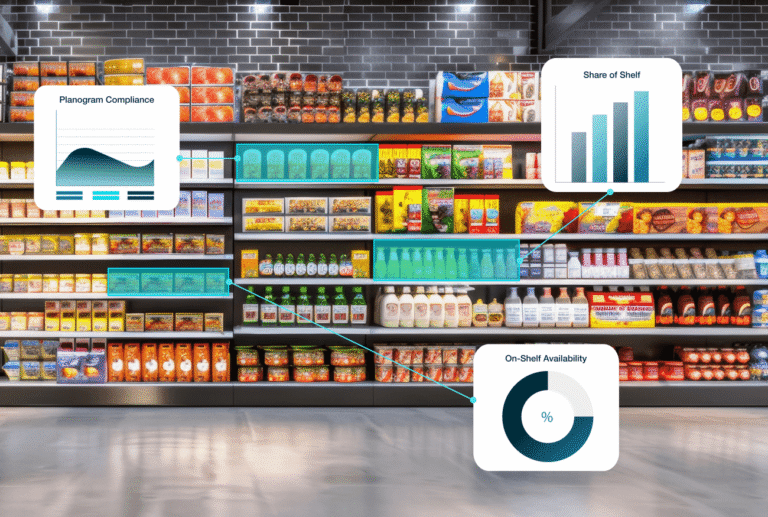


Your POG (planogram) is perfect: every SKU mapped, every facing accounted for, and every promotional slot assigned. On paper, the shelf is exactly where it needs to be.
But then a field rep walks into a store three states away, and the shelf tells a completely different story: A competitor’s product has crept into your facings, two SKUs are misplaced, and a promotional display that should have gone up three days ago is still sitting in the backroom. None of these mistakes show up in your reporting because no one flagged them, and no system caught them.
This is the gap that digital shelf intelligence is designed to close—the distance between the shelf you planned and the shelf that actually exists. For CPG brands and retail teams managing execution across hundreds or thousands of locations, this gap extends far beyond a minor inconvenience and into a major revenue problem.
Understanding what digital shelf intelligence is, why it matters, and how it connects to stronger planogram performance starts with a simple question: how much do you actually know about what’s happening on your shelves right now?
What Is Digital Shelf Intelligence?
Digital shelf intelligence involves capturing, analyzing, and acting on data from physical store shelves in real time, giving brands and retail teams a clear, accurate picture of what is actually happening at the point of sale, and not what a system assumes, or a rep recalls from memory.
It turns the shelf into a source of product data, removing reliance on manual stock tracking, periodic audits, or self-reported field notes. Digital shelf intelligence uses technology like AI-powered image recognition to capture retail data objectively and consistently across every store, every visit.
The term “digital shelf” is often associated with e-commerce for product pages, search rankings, and online availability. In physical retail, the stakes are just as high, and the execution gaps are often larger. A CPG brand can have flawless online presence and still lose the sale because the wrong product is facing forward in aisle six.
In-store digital shelf intelligence answers the questions that actually drive a purchase:
- Are the right products on the shelf?
- Are they in the right location?
- Are they priced correctly?
- Have we stocked the quantities the planogram calls for?
This means visibility into the real shelf, a living picture that field teams and headquarters can act on together, and not a snapshot from last quarter.
The Consequences of Poor Shelf Visibility
No digital shelf strategy survives contact with poor visibility, and most problems aren’t discovered until it’s too late to do anything about them. By then, the cost goes beyond lost revenue. Empty shelves and poor execution erode customer loyalty one missed purchase at a time.

A promotion runs for two weeks, but the compliance data arrives a week too late; pricing issues surface in monthly reviews, and out-of-stocks only show up in quarterly reports long after shoppers have moved on to a competitor.
The core problem isn’t that these issues exist—it’s that brands find out about them too late and too infrequently to respond. This kind of limited shelf visibility creates a compounding problem across every level of the organization:
- Field teams cover too much ground to manually verify every shelf condition at every location
- Reporting cycles are too slow to match the pace of what’s actually happening in store
- Data accuracy is only as reliable as the person who collected it
- Trade decisions get made on incomplete information, with no way to course-correct in time
- Promotional spend drives traffic to stores where products aren’t where they should be
And because nothing triggers an alert, the gap between plan and reality quietly widens across the entire network.
Digital shelf intelligence changes this equation by replacing assumptions with evidence, and this is the engine behind any digital shelf optimization effort worth running. When teams have accurate, timely data about what’s happening on the shelf, they can respond to problems while there’s still time to fix them.
Why Your POG Needs Digital Shelf Intelligence
A planogram defines where every product should sit, how many facings it should have, and how the shelf should look to a shopper walking the aisle.
But what doesn’t it tell you? Whether any of that actually happened.
The gap between a planogram and a real shelf opens the moment a store receives it. Resets get rushed. Products get placed in the wrong location. Facings collapse after a busy weekend and no one restocks them correctly. A competitor’s rep quietly claims an extra facing while no one is watching. By the time a field rep visits, the shelf may look broadly acceptable while deviating from the plan in ways that matter enormously to sell-through.
The conditions that break planogram compliance are predictable, yet they continue to show up in stores every day:
- Out-of-stocks that leave gaps where your product should be
- Misplaced SKUs that disrupt the intended layout and confuse shoppers
- Poor facings that reduce visibility and share of shelf
- Pricing inaccuracies that undermine promotional and pricing strategies
- Competitive encroachment that erodes space your brand has already won
- Promotional non-compliance that means displays never go up, or go up wrong
Each of these is a real revenue problem, and without digital shelf intelligence, most of them go undetected between visits or get missed entirely during one.
When field teams can see the real shelf against the intended planogram, stock availability stops being an assumption and becomes a verified fact. That’s the difference between a planogram as a document and a planogram as a living standard that actually holds in the field.
What Digital Shelf Intelligence Helps Teams Measure
Digital shelf optimization starts with knowing what to measure. For CPG brands and retail teams, that means going beyond a general sense of whether a shelf “looks right” and getting precise about the conditions that drive (or cost) revenue.
The key metrics worth tracking fall into a few core categories:
Availability & Stock
Knowing whether your product is actually on the shelf and visible to shoppers is the baseline everything else depends on.
- On-shelf availability: Is the product physically present and accessible to shoppers?
- Out-of-stock detection: Where are the gaps, and how long have they been there?
Placement & Compliance
The right product in the wrong place is still an execution failure, and these metrics show whether the shelf reflects the plan.
- Planogram compliance: Does the actual shelf match the intended layout, at the SKU level?
- Facings and share of shelf: Is the brand holding the space it’s entitled to?
- Competitive encroachment: Are competitor products creeping into your allocated space?
Pricing & Promotions
Execution at the shelf level determines whether your promotional investment actually reaches the shopper.
- Pricing accuracy: Are shelf prices reflecting current promotional or everyday pricing?
- Promotional execution: Are displays, secondary placements, and POS materials in place and correct?
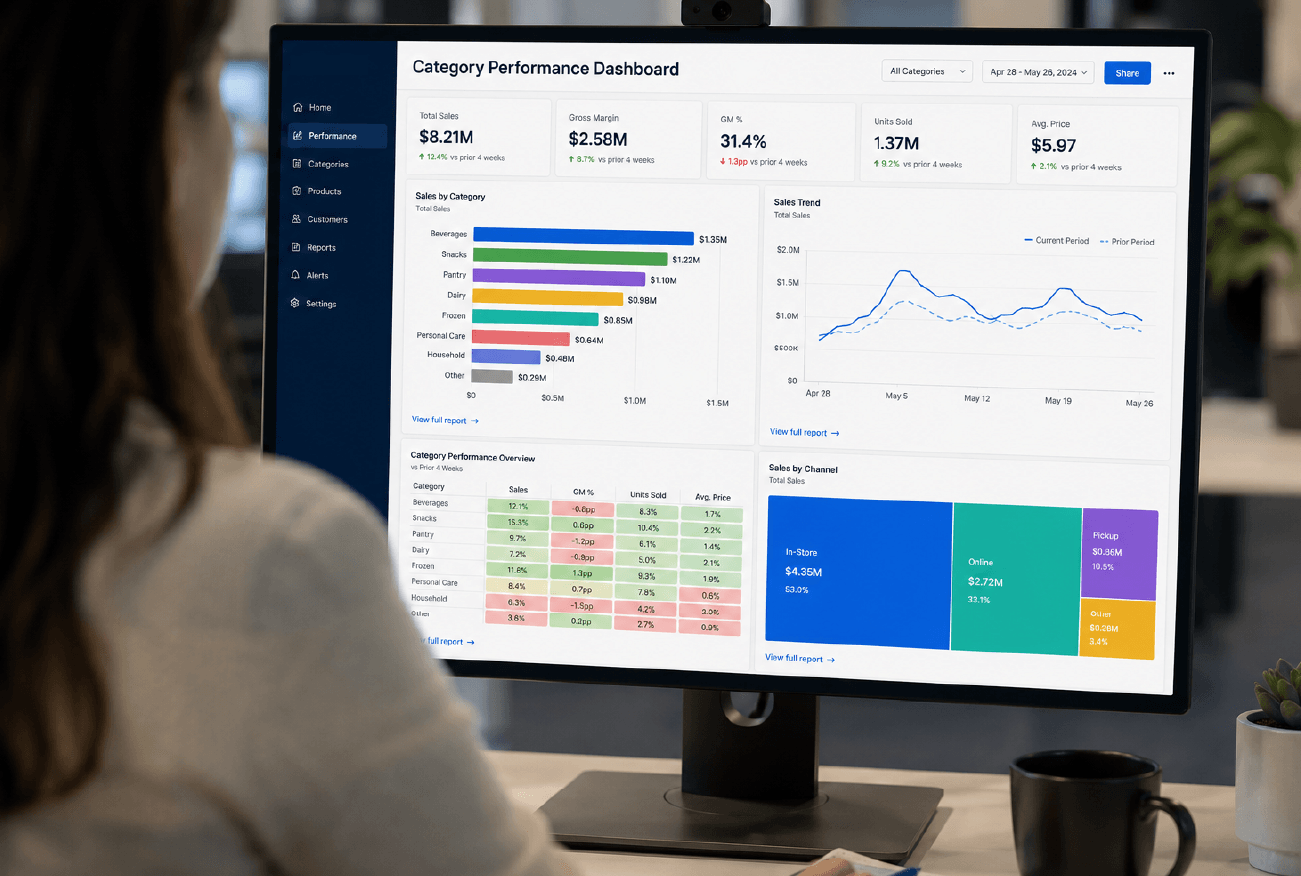
When automated reporting replaces manual data collection, patterns emerge that would otherwise stay hidden in the noise of day-to-day field operations.That’s when shelf data stops being a reporting exercise and starts driving real decisions.
How FORM Supports Smarter Shelf Execution
Knowing what’s happening on the shelf is only half the equation. The other half is gaining actionable insights fast enough to do something about it.
GoSpotCheck by FORM brings digital shelf intelligence to life all in one platform, through a combination of AI-powered image recognition, mobile task management, and real-time field execution. Rather than pulling data from the shelf and sending it somewhere for someone to review later, FORM closes the loop at the point of discovery:
The rep sees the issue, gets the task, fixes the problem, verifies the correction, and is back on the shelf—all in a single visit.
The capabilities driving this loop include:
- Image recognition AI that turns a single shelf photo into SKU-level data instantly — identifying specific products, flagging gaps, and scoring planogram compliance without manual counting
- Augmented reality shelf scanning that surfaces compliance issues in real time as a rep walks the aisle, before they’ve even taken a photo
- Automated task generation that triggers a corrective action the moment an issue is detected, so nothing gets logged and forgotten
- Photo reporting that creates a verified, visual record of shelf conditions — and corrections — organized automatically by location, campaign, or category
- Offline-first functionality that keeps field teams fully operational in coolers, basements, and low-connectivity environments where shelf problems are often the hardest to catch
For brands managing execution across large, distributed field teams, FORM turns shelf conditions into the key performance indicators leadership needs to make faster, better decisions. The goal isn’t better reports—it’s better shelves. And visual intelligence at the shelf is how FORM makes that happen in real time.
Better Shelf Decisions Start With Better Shelf Intelligence
The shelf is where strategy meets reality, and where execution gaps quietly drain revenue. Building a digital shelf strategy that actually holds means knowing what’s happening in every store, not just the ones a rep visited last week.
The brands gaining ground aren’t the ones with the most field reps, but the ones giving those reps the clearest picture of what’s on the shelf, and the fastest path to fixing it.
Ready to optimize your shelf? Book a demo to see how FORM helps teams capture shelf conditions, measure planogram compliance, and take action faster in the field.
Frequently Asked Questions
What is digital shelf analytics, and how does it differ from traditional reporting?
Digital shelf analytics is the practice of turning raw shelf data into structured, actionable insight — tracking shelf performance, product visibility, and availability gaps across every store in real time. Traditional reporting relies on manual audits and delayed data cycles that make it nearly impossible to track performance before the window to act has already closed. With real-time analytics, brands move from lagging indicators to leading ones, catching issues while they can still be fixed.
How does digital shelf intelligence help brands stay competitive?
The shelf is where competitor strategies play out in real time — extra facings claimed, promotional space encroached upon, pricing undercut without warning. Digital shelf intelligence gives brands the real-time data they need to identify opportunities, respond to competitive moves, and protect the product positioning they’ve worked to establish. Brands that can see what’s happening at the shelf level are the ones best equipped to stay competitive when it matters most.
Which performance metrics should CPG teams prioritize?
The most critical metrics for digital shelf performance center on availability and execution. Availability tracking surfaces stock levels and availability gaps before they compound into lost sales. Planogram compliance metrics show whether product positioning is holding at the store level. Pricing and promotional data reveal whether trade spend is actually reaching the shopper. Together, these form the foundation of data-driven decisions that protect both revenue and customer trust.
How does real-time data improve product availability and shelf execution?
When field teams have access to real-time data, product availability stops being an assumption and becomes a verified, measurable standard. Rather than discovering a stock levels problem in a weekly report, teams can identify and fix availability gaps during the store visit itself — before a shopper reaches for a product that isn’t there. That kind of visibility is what separates reactive shelf management from a digital shelf strategy built on consistent, store-level execution.