

Walk into any grocery store and the shelves look full. But if you’re responsible for what’s on them, “looks full” isn’t good enough. A shelf can appear stocked while hiding one of retail’s most persistent and costly problems: products the system says exist, in locations where they simply aren’t.
This is quietly draining revenue from some of the world’s largest CPG brands and retail chains every single day, and it’s called “ghost inventory”.
The challenge isn’t just finding the gaps: it’s that traditional methods were never built to find them accurately or quickly enough to matter. AI image recognition changes that equation. By turning a single shelf photo into instant, SKU-level data, your field teams can finally close the loop between what the system believes and what the shelf actually shows.
What Is Ghost Inventory (and Why Is It So Costly)?
Ghost inventory — sometimes called phantom inventory — is the gap between what a retailer’s system records and what a shopper can actually pick up off the shelf. The system says it’s in stock but the shelf tells a different story.
The root causes are well-documented, and they’re happening simultaneously across large retail operations:
- POS mis-scans and data entry errors that record a sale incorrectly, leaving the system blind to the actual stock level
- Backroom bottlenecks where product sits undetected, never making it to the floor
- Shrinkage from theft, damage, or spoilage that goes unlogged
- Poor replenishment processes built on system records that no one has verified against physical reality, leaving inventory levels misaligned with what’s actually on the shelf
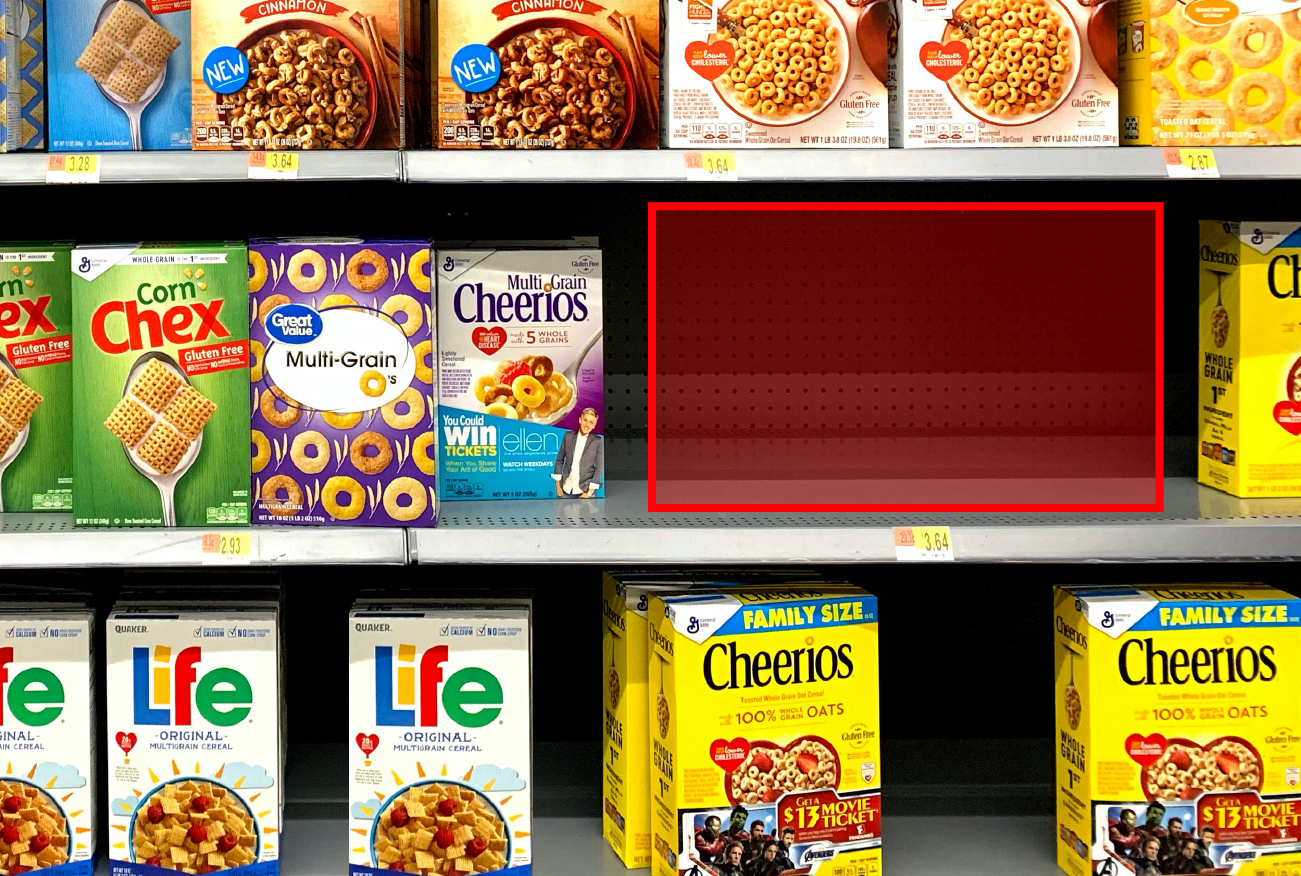
What makes ghost inventory particularly damaging is that it creates losses that are invisible by design. These aren’t traditional out-of-stocks where the system flags an empty location. These are invisible out-of-stocks—where the data actively obscures the problem. Because the system still shows the product as available, automatic reorder signals never fire, your field reps have no reason to investigate, and the gap widens quietly across hundreds or thousands of locations.
At scale, the numbers are stark because ghost inventory is a major contributor to the $1.73 trillion inventory distortion problem facing the global retail industry, with out-of-stocks representing the largest single share of that loss.

The High Cost of Out-of-Stocks in Retail
An empty shelf is a cascading problem that affects revenue, loyalty, and marketing efficiency all at once. Globally, poor shelf availability costs retailers and brands over $1 trillion in lost sales every year. Ghost inventory makes that number worse, because the loss is hidden behind data that looks healthy.
The shopper impact is immediate and often permanent:
- Brand switching happens in seconds — 43% of shoppers will reach for a competitor’s product the moment their preferred item isn’t on the shelf, with no second thought and no loyalty penalty to the brand they’re leaving
- Lost loyalty compounds over time, as repeated disappointments erode the trust that drives repeat purchases
- Basket abandonment occurs when a missing item was the primary reason for the trip in the first place
For brands running trade promotions, the cost cuts even deeper. Your marketing spend drives traffic to stores where the product isn’t actually on the shelf, while excess inventory sits misplaced in the backroom, undetected. This turns advertising dollars into a direct subsidy for competitors because you’ve paid to bring the shopper in, but someone else gets the sale.
The hard truth is that ghost inventory makes all of this harder to detect and harder to fix. When the data says everything is fine, there’s no urgency to investigate. By the time the discrepancy surfaces, the promotional window has closed, the shopper has moved on, and the revenue is gone.

How AI Image Recognition Fixes the Gap
Manual checklists were never designed to catch ghost inventory. A field rep working down an audit form relies on what they can see and count, and when the system already says a product is in stock, there’s no real prompt to look any harder. The result is an audit that looks complete but misses the discrepancies that cost brands the most.
GoSpotCheck by FORM replaces this process entirely, and it starts before you even take a photo.
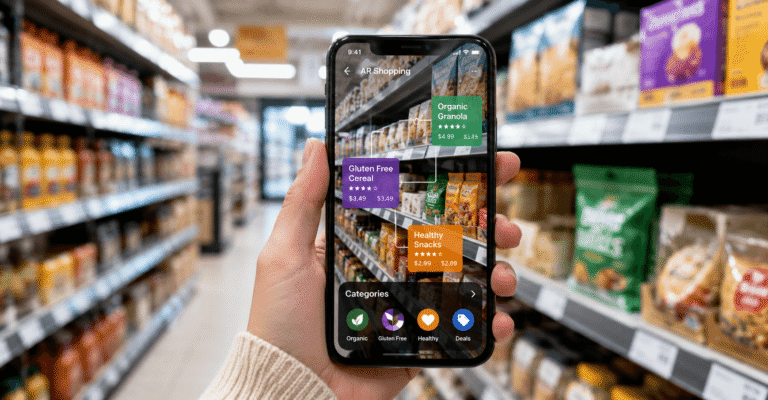
Using augmented reality, a rep simply holds up their phone as they walk the aisle. The AR overlay does the work in real time, surfacing gaps, flagging misplaced SKUs, and highlighting compliance issues as they move through the store. This means no stopping, no manual counting, and no waiting for results, because the shelf is being audited the moment they look at it.
For teams that want a more structured record, a single point-and-shoot photo delivers the same SKU-level intelligence, instantly identifying every product present, every gap, and every planogram deviation. Either way, the core capabilities driving that insight are the same:
- Instant SKU recognition identifies specific products — not just categories — distinguishing one flavor or variety from the next in a single pass
- Gap detection flags empty facings and misplaced products in real time, surfacing the invisible out-of-stocks that manual audits routinely miss
- Planogram compliance scoring compares the actual shelf against what should be there, so reps know immediately whether the right products are in the right locations
The shift from manual to AI-assisted auditing is the shift from reactive to real-time. When a gap is detected, the system automatically generates a task for the rep to fix it right there and then, while they’re still standing in the aisle, meaning no follow-up visit and no delayed report. The problem is found, flagged, and resolved in a single store visit.
Reclaim the Shelf: From Visibility to Profitability
Solving ghost inventory is a revenue problem, and the brands treating it that way are the ones gaining ground.
Retail AI image recognition makes it possible to act on what’s happening in store while there’s still time to do something about it. When a field rep can walk an aisle, spot a compliance gap in real time, fix it before they leave, and verify the correction with a photo, the entire retail execution loop changes. Leadership stops managing yesterday’s problems and starts preventing tomorrow’s.
For GoSpotCheck by FORM, that closed loop translates directly to measurable outcomes:
- Recovered revenue from out-of-stocks that would have gone undetected through manual audits
- Promotion compliance that actually holds — because reps can verify execution at the SKU level on the day it matters, not days later
- Reduced audit time that frees field teams to spend less time counting and more time selling
- Cleaner inventory data that closes the gap between system records and shelf reality, eliminating the phantom inventory problem at its source
The deskless workforce is often the most data-rich and resource-poor part of a retail organization. Field reps have eyes on thousands of stores, but without the right tools, that intelligence never reaches the people who need it. GoSpotCheck by FORM gives frontline teams a mobile-first, offline-capable platform that turns every store visit into structured, decision-ready data.
The brands winning at the shelf aren’t the ones with the most field reps — they’re the ones giving those reps the clearest picture of what’s actually happening in store, and the tools to act on it before they leave the aisle.
Stop losing revenue to manual errors and poor shelf visibility. Schedule a Demo today to see how our AI-powered retail image recognition technology can streamline your audits and eliminate ghost inventory for good.
Frequently Asked Questions
Can AI image recognition identify products in difficult environments or poor lighting?
Yes — and this is where enterprise-grade AI separates itself from generic solutions. GoSpotCheck by FORM uses deep learning to identify SKUs based on shapes, logos, and color patterns rather than relying on ideal conditions. That means reliable performance through foggy freezer glass, in low-light back-of-house areas, and even areas with no internet connectivity. The environments that break standard models are the ones FORM was specifically built for.
How quickly does a field rep see results after scanning a shelf?
Fast enough to act on it before leaving the store. Once a photo is captured, the AI returns a full scorecard of gaps and SKU-level data in minutes — giving the rep everything they need to fix an out-of-stock issue while they’re still standing in the aisle, rather than waiting on a report the following day.