

Seasonal execution is one of the highest-stakes responsibilities in the grocery industry. Displays need to turn, planograms need to hold, and shelves need to stay full—all while the next reset is already on the horizon. This checklist is built to help grocery merchandisers get it right, every season.
What Is a Grocery Merchandiser?
A grocery merchandiser is responsible for how products look, feel, and perform on the shelf — managing planogram compliance, seasonal resets, display execution, and on-shelf availability across a grocery store’s departments. The job is straightforward in theory: get the right products in the right place at the right time. In practice, it means executing across every department, every season, without missing a beat.
This checklist gives grocery merchandisers a reliable framework for every seasonal reset, from summer grilling to holiday entertaining. Use it to align your team, standardize your store walks, and make sure nothing gets missed when the calendar turns.
What Every Grocery Merchandiser Needs to Execute Each Season
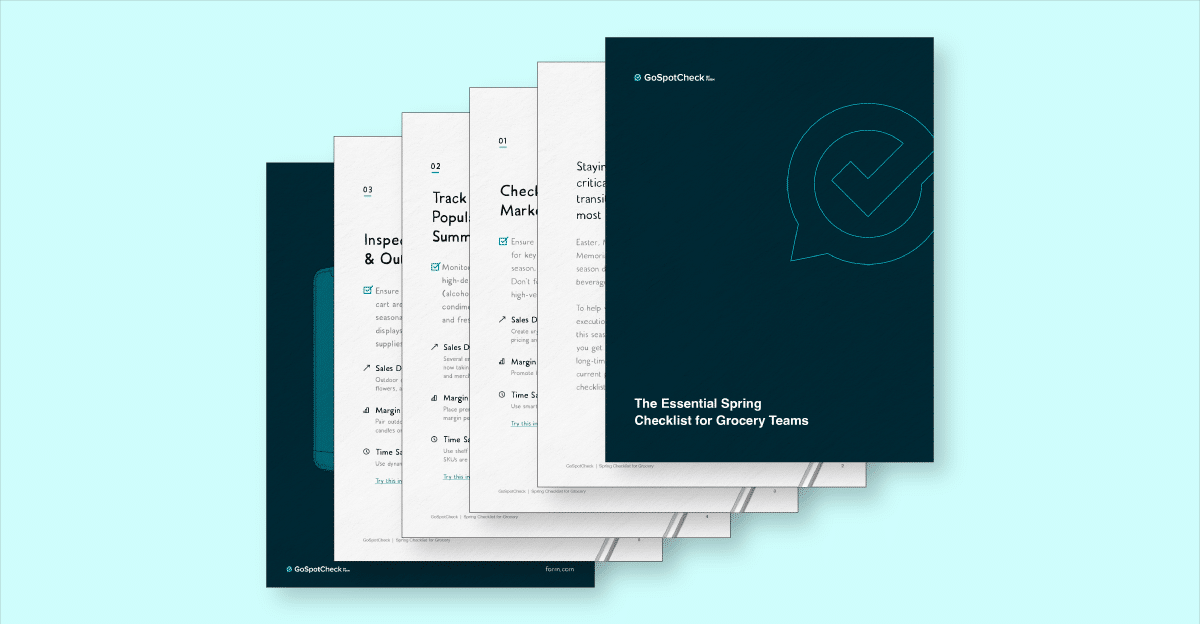
The checklist below covers seven execution areas to walk at every seasonal transition. Each item includes a Sales Driver, Margin Booster, and Time Saver tip to help your team move faster and perform better on the floor.
1. Inspect Store Exterior and Outdoor Displays
Ensure the store entrance, sidewalks, and cart areas are clean, welcoming, and seasonally relevant. Restock and refresh outdoor displays to match the current season — patio sets, plants, and garden supplies in spring and summer; firewood, seasonal décor, and bagged goods in fall and winter.
Sales Driver: Outdoor displays are prime real estate to highlight new or seasonal items— like fresh fruit, flowers, and potted plants—before shoppers even walk in.
Margin Booster: Pair outdoor patio furniture or garden goods with higher-margin accessories like citronella candles or grilling tools.
Time Saver: Use dynamic task management to create specific follow-up tasks by team.
2. Check Seasonal Marketing and Signage
Ensure all promotional materials are updated for the current season’s key events—grilling season and graduations in spring and summer, Halloween and Thanksgiving in fall, holiday entertaining and New Year’s in winter. Verify pricing signage for high-velocity or featured promo items.
Sales Driver: Create urgency with limited-time products and seasonal exclusives, and ensure accurate pricing and promo signage will further fuel purchase decisions. Strong promotional execution in grocery retail starts with accurate, timely signage.
Margin Booster: Promote high-margin seasonal items with signage near entrances or checkout zones.
Time Saver: Use smart photo reporting to capture and segment signage by promotion and location.

3. Verify Planogram Compliance Across Key Sections
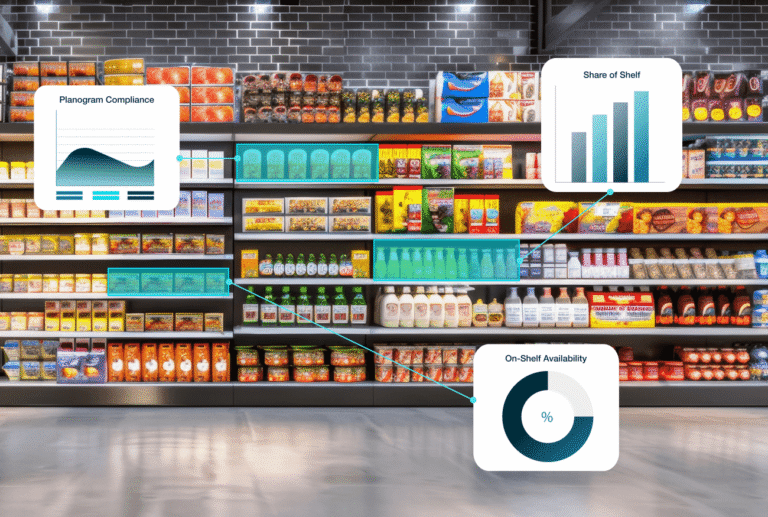
Seasonal resets are when planogram compliance is most at risk. New inventory comes in, sets shift, and with the pace of execution, facings get missed, and the product ends up in the wrong position. Walk key sections at every seasonal transition to confirm planogram adherence, facing counts, and correct product placement before the selling window opens.
Sales Driver: Planogram compliance directly protects on-shelf availability. A correctly set seasonal section captures the full revenue window, while a misset section loses it day by day.
Margin Booster: Private label and higher-margin SKUs are often planogram-specified for prime shelf positioning. Compliance checks ensure they’re getting the placement (and the sales) they’re allocated.
Time Saver: Use GoSpotCheck’s AR shelf scanning to sweep a section and get instant SKU-level compliance scoring with corrective actions surfaced on-device—no manual count sheets, no clipboard.
4. Track Availability of Popular Seasonal SKUs
Monitor on-shelf availability for high-demand seasonal items. The SKU mix shifts throughout the year—beverages, condiments, and picnic supplies in summer; baking staples, soups, and seasonal proteins in fall; entertaining staples and premium items in winter; fresh produce and health-focused SKUs in spring.
Sales Driver: Several emerging brands are taking the place of traditional summer drinks, with functional sodas and better-for-you beverages growing their share of the cooler fast. Many of these brands offer shelf-stable SKUs, and merchandising multiple packs of seasonal flavors near the register can encourage impulse buys.
Margin Booster: Place premium condiments near featured meats to drive complementary purchases and increase margin per basket.
Time Saver: Use shelf intelligence AI to instantly track empty facings and out-of-stocks to ensure high-demand SKUs are always available.
5. Audit Fresh Produce Quality and Merchandising
Fresh produce demands vary with every season—spring berries and tender greens, summer stone fruit and corn, fall apples and squash, winter citrus and root vegetables. Regardless of the season, the standards don’t change: freshness, full displays, clean cases, and accurate promotional signage are essential.
Sales Driver: Cross-merchandise produce with dips, dressings, or smoothie ingredients. RTD juices also perform well here, consistently commanding a premium price point among non-alcoholic beverages.
Margin Booster: Highlight local and organic SKUs to drive a higher average item price and better margin performance.
Time Saver: Use photo tasks with reference images to speed up audits and maintain consistent freshness standards—or explore image recognition for a faster, automated approach.

6. Check Shelf Rotation and Backstock
Seasonal periods bring high inventory volume and high velocity, a combination that makes shelf rotation and backstock management easy to let slip. Build a rotation check into every seasonal execution walk: confirm FIFO compliance across high-turnover categories, pull dates on perishable and near-date items, and ensure backstock is being pulled consistently to keep facings full.
Sales Driver: Full, well-rotated shelves signal availability and freshness to shoppers. During peak seasonal periods, a depleted or disorganized shelf sends customers to a competitor for the rest of their basket.
Margin Booster: Proper rotation prevents shrinkage on perishable and seasonal items that carry strong margins but limited shelf lives. Every avoided markdown is margin-protected.
Time Saver: Use GoSpotCheck’s scheduled recurring tasks to build rotation checks into weekly team workflows automatically, so backstock management is a consistent habit, not a reactive scramble before a holiday or peak weekend.
7. Verify the Setup of Seasonal Secondary Displays
Confirm placement of on-shelf or off-shelf secondary displays stocked with the season’s essential non-food and cross-category items, like coolers, sunscreen, and pool toys in summer; candy, baking supplies, and harvest décor in fall; holiday gifting, entertaining, and winter essentials in winter; gardening, wellness, and outdoor items in spring.
Margin Booster: Feature small, high-margin items (higher-end sunscreens, novelty drinkware) on secondary displays for easy impulse add-ons.
Time Saver: Use task management with conditional logic to adjust checklists based on locally relevant merchandising plans.
Stay Ready for Every Seasonal Grocery Reset
Seasonal execution can make or break performance during grocery’s highest-stakes weeks. For grocery merchandisers, that pressure compounds when teams are stretched, timelines are tight, and every store needs to be set right—at the same time.
GoSpotCheck by FORM gives grocery merchandising teams the tools to standardize execution, surface issues in real time, and close the gap between what the plan says and what’s actually on the shelf. From planogram compliance to produce audits to seasonal display setup—it’s all in one place.
Use this checklist every season. And when you’re ready to take execution further, GoSpotCheck is built for it.
Frequently Asked Questions About Grocery Merchandising
How often should grocery merchandisers conduct execution audits?
Most grocery merchandising teams conduct formal execution walks at every seasonal reset, at ad changes, and ahead of key holiday periods. High-velocity departments like fresh produce and beverages typically require more frequent checks — daily or several times per week — to maintain freshness standards and on-shelf availability.
What tools do grocery merchandisers use?
Modern grocery merchandising teams use field execution platforms like GoSpotCheck by FORM to manage task assignments, conduct digital audits, capture photo documentation, verify planogram compliance with AI-powered shelf scanning, and report on execution quality across locations in real time