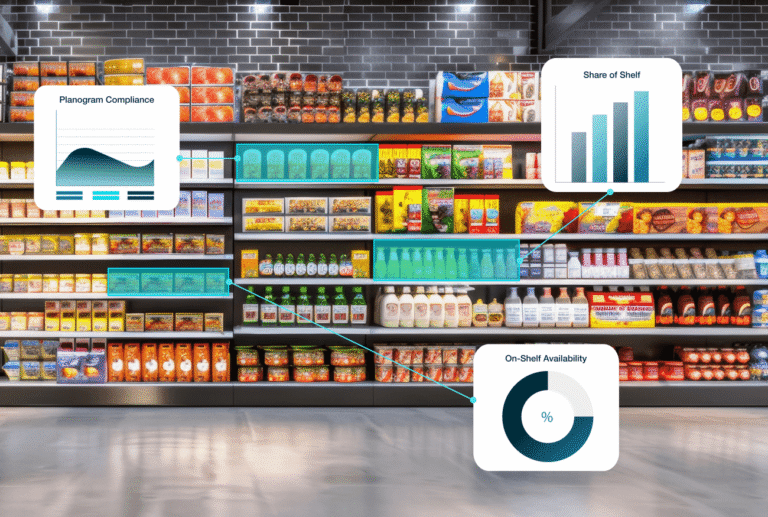


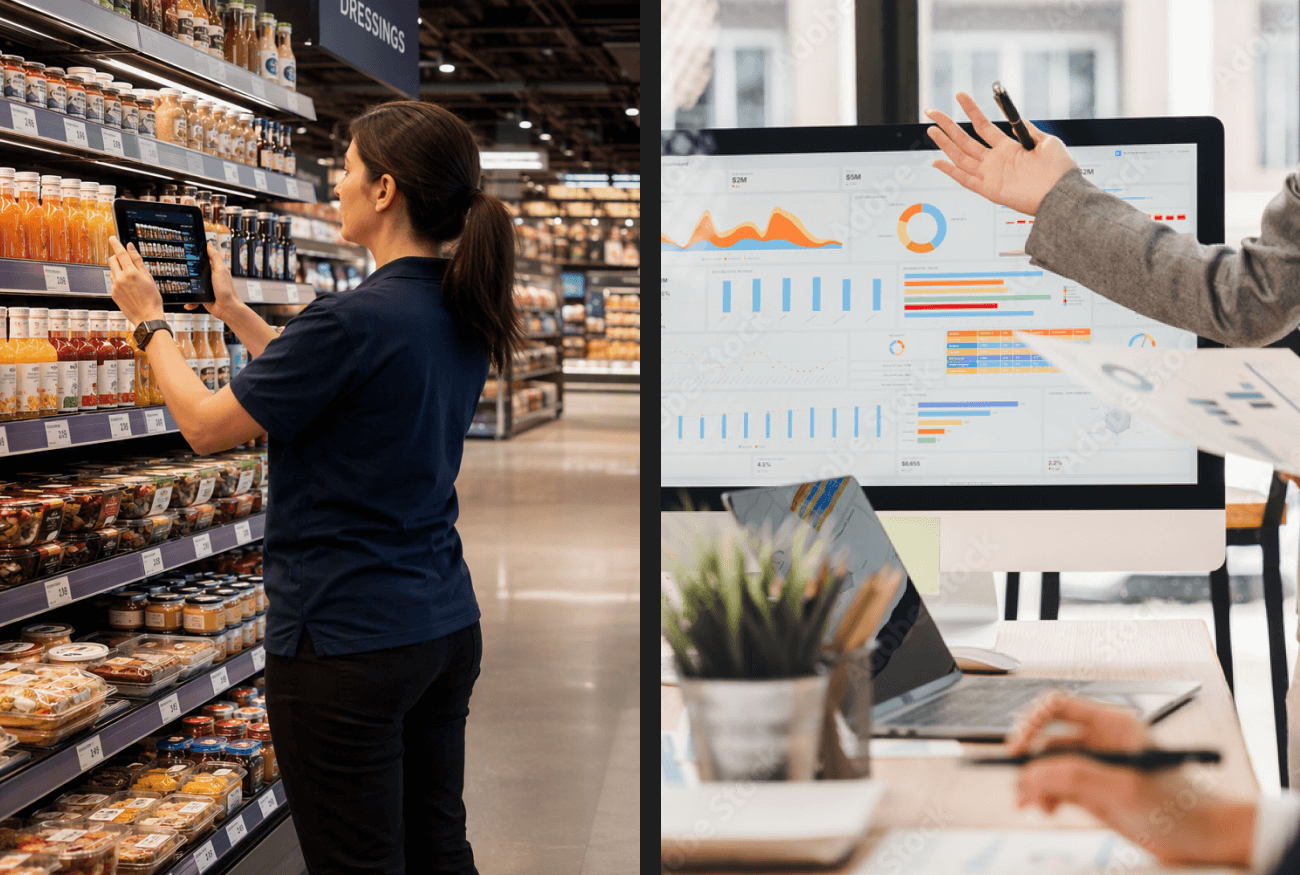
The era of static, twice-a-year planogram reviews is over. In 2026, CPG category management is caught in a crossfire of economic pressure, polarized consumer spending, and the rapid rise of AI-driven shopping habits—and the old playbook simply can’t keep pace.
To win at the shelf, CPG brands must shift from reactive hindsight to predictive, dynamic strategy. But here’s the catch: even the smartest category strategies are worthless if they’re not executed correctly in your physical stores. That’s what makes planogram compliance software the critical foundation beneath modern category management. It isn’t a nice-to-have, but the mechanism that turns strategy into shelf reality.
This guide covers how you can adapt to autonomous assortment optimization, escape the price war, unify internal silos, and navigate the agentic commerce era—all by securing truth from the physical shelf.
Key Takeaways
- CPG category management is shifting from static, historical reviews to dynamic, AI-driven strategies that respond to shopper behavior and consumer demand in real time
- CPG assortment optimization depends on accurate, real-time shelf data—without it, even the most advanced category strategies are built on assumptions rather than reality
- Execution is the new differentiator. Brands investing in innovation, category growth, and dynamic pricing will see those investments fail if planogram compliance isn’t guaranteed at the store level
- The rise of agentic, AI-driven commerce means physical shelf accuracy now directly impacts digital performance, with phantom out-of-stocks penalizing brands across both physical stores and online channels
Rule 1: Move from Static Reviews to Autonomous Assortment
Relying solely on historical point-of-sale data is no longer enough to manage a fast-moving category. Consumer trends shift quickly, and by the time a twice-yearly category review reflects a change in shopper behavior, the opportunity has often already passed.
Leading CPG category management teams are turning to advanced data analysis and AI-powered analytics to monitor shelf health continuously. These models depend on real-time, granular inputs to function well, which means planogram compliance software equipped with image recognition is becoming essential. Rather than waiting on retailer data that may be weeks old, your field teams can capture conditions as they happen and feed automated insights directly into assortment planning systems. In practice, that shift unlocks a few key capabilities:
- Continuous shelf health monitoring instead of periodic, backward-looking audits
- Store cluster-level visibility that reflects real consumer demand, not regional averages
- Dynamic pricing models grounded in verified shelf reality rather than outdated assumptions
- Faster CPG assortment optimization through adjustments to SKU-level performance, inventory turns, and shelf space allocation
The result is a category management process that behaves less like a static plan and more like a living system, giving CPG category management a genuine competitive advantage over brands still relying on legacy systems and outdated static planograms.
Rule 2: Use Innovation to Escape the Price War
Consumers are growing weary of shrinking pack sizes and creeping inflation, and pure price competition only leads one direction: a race to the bottom that erodes margin growth for everyone involved. Nimble category management offers a better path forward.
Rather than competing purely on price, the strongest CPG brands are using market intelligence and consumer trends data to bring unique flavors, formats, and functional ingredients to shelf faster than competitors. This is especially critical for reaching the “buzzworthy” Gen Z and Millennial shopper, whose shopper expectations are shaped heavily by speed and novelty rather than loyalty alone.
But innovation only pays off if it reaches the shelf, and investment in Research and Development (R&D) can be wasted if new product introductions don’t make it into physical stores correctly, or get delayed by execution gaps between launch and store-level rollout. This is where AI-powered planogram compliance earns its place in your strategy by:
- Verifying that new product introductions receive their authorized facings immediately upon launch
- Confirming promotional displays go up on schedule rather than days or weeks late
- Flagging store-level execution gaps before they erode the category growth an innovation was meant to drive
- Protecting R&D investment by ensuring strategy decisions made at headquarters actually reach the shelf
For CPG manufacturers trying to escape the price war, the real differentiator isn’t just having a better product. It’s making sure that product is actually where it’s supposed to be, the moment it launches.
Rule 3: Unify Commercial and Procurement Strategies
Modern CPG category management doesn’t operate in a silo. If your organization still treats sales, retail, manufacturing, and procurement as separate functions, you’re likely leaving category performance on the table. The strongest CPG companies are breaking down those walls and connecting category strategies across the entire supply chain, starting with how early suppliers get involved.
When you bring packaging and ingredient suppliers into the design phase rather than looping them in after decisions are finalized, the benefits compound quickly:
- Shorter development cycles, since sourcing and design decisions happen in parallel rather than sequentially
Reduced portfolio complexity, making it easier for procurement to plan around real category needs - Fewer last-minute changes that disrupt inventory planning and slow down sales growth
- A supply chain that responds to your actual roadmap, not assumptions about what might be needed
None of this works without constant feedback from the physical store, though. Planogram compliance tools close that loop, giving procurement real-time visibility into out-of-stocks and compliance issues at shelf level before they compound into bigger problems. When your commercial and procurement teams work from the same data, your category management process stops reacting to issues after they’ve already cost you revenue, and starts preventing them before they happen.
Rule 4: Master the Agentic Omnichannel Ecosystem
Your retail environment no longer ends at the store door. E-commerce, direct-to-consumer channels, and rapidly growing Retail Media Networks have made category management a genuinely omnichannel discipline, and that complexity is only accelerating.
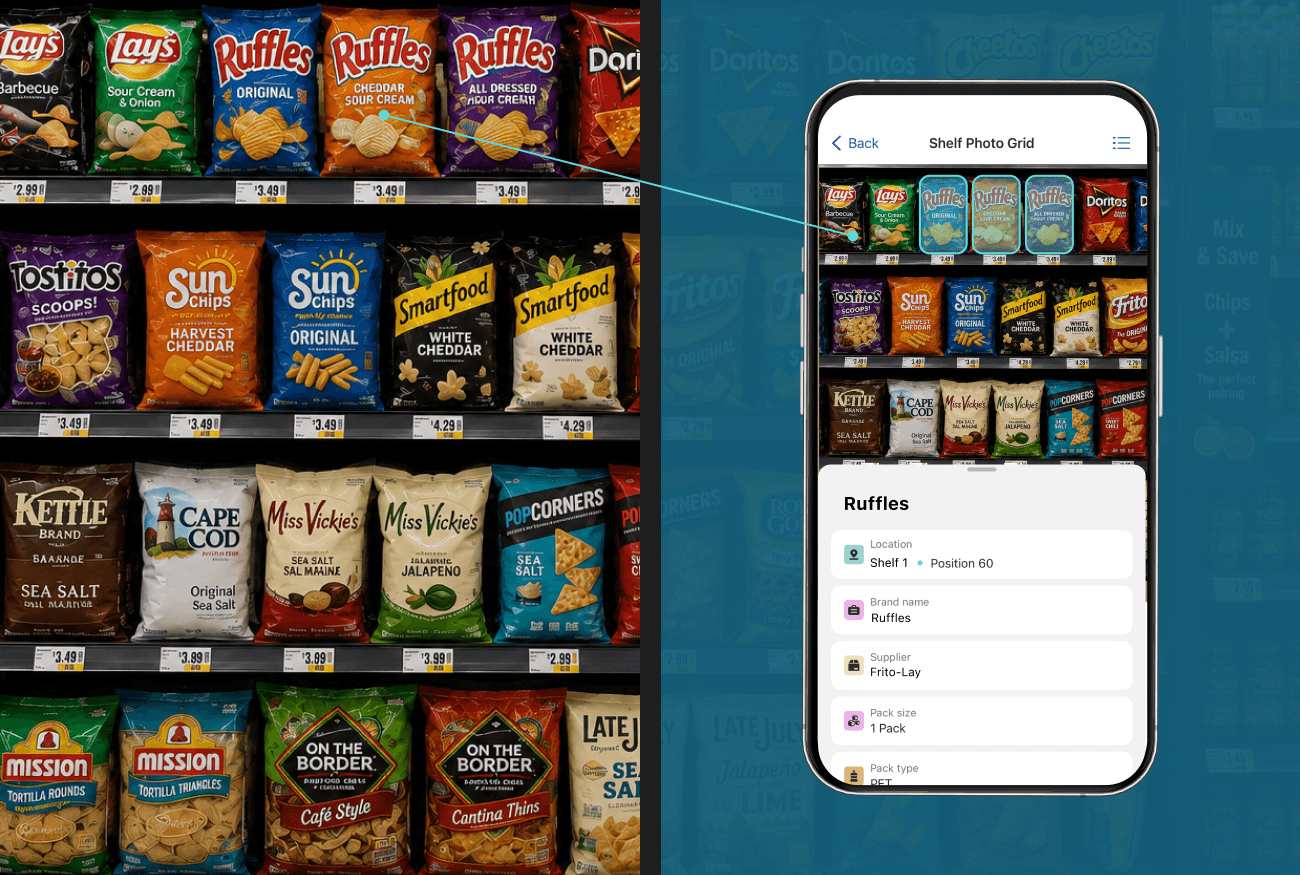
The biggest shift, though, is who’s actually doing the shopping. AI assistants and shopping bots, like ChatGPT and Google’s agentic shopping features, are increasingly conducting product research and purchasing decisions on behalf of consumers. So how do you optimize for an AI buyer rather than a human one? The answer comes down to one thing: inventory accuracy.
AI algorithms are unforgiving when it comes to phantom out-of-stocks, situations where a system says a product is available but it’s physically missing from the shelf. When that happens, your brand risks being penalized across digital channels, regardless of how strong your category strategies look on paper. A few things help protect against this:
- Planogram compliance software that ensures physical shelf data flawlessly matches digital inventory records
- Real-time image recognition that catches out-of-stocks before they’re reflected incorrectly in e-commerce systems
- Smart packaging and QR codes as a supplementary layer of data capture, helping verify product presence beyond the store shelf
- Consistent compliance across physical stores and digital storefronts, protecting your brand’s ranking in agentic and algorithmic shopping environments
As AI-driven shopping becomes more common, the brands that win won’t just be the ones with the smartest category strategies. They’ll be the ones whose physical execution is accurate enough that the algorithms can actually trust it.
Turning Strategy Into Shelf-Level Reality
The opportunity for hyper-targeted, data-driven category growth has never been greater. But the brands that win in 2026 won’t be the ones with the most sophisticated strategy decks. They’ll be the ones treating category management as a living system, fueled continuously by accurate data from the physical shelf.
The smartest CPG category management strategies in the world mean nothing if they aren’t executed at the shelf, so stop flying blind with manual audits and start protecting your trade spend.
Book a demo and see how FORM’s planogram compliance software bridges the gap between strategy and execution by delivering absolute truth from the field.
Frequently Asked Questions
How often should category reviews take place in CPG category management?
Traditional category reviews were typically conducted twice a year, but that cadence is increasingly outdated given how quickly consumer trends and shopper behavior shift. Leading CPG companies are moving toward continuous review cycles, supported by real-time shelf data, so assortment decisions reflect current market conditions rather than data that’s already months old by the time it’s acted on.
What role does SKU rationalization play in CPG assortment optimization?
SKU rationalization is the process of evaluating your product mix and removing underperforming items to free up shelf space for higher-potential SKUs. As portfolio complexity grows, particularly across categories like household care and pet care, rationalization becomes essential to maintaining margin growth and keeping assortment decisions aligned with actual category sales performance rather than legacy habit.
How does store cluster analysis improve assortment planning?
Rather than applying a single CPG assortment optimization strategy across every location, store cluster analysis groups physical stores by shared characteristics like consumer demand, seasonal trends, or demographic profile. This allows category managers to tailor the product mix to what each store cluster actually needs, improving inventory turns and customer satisfaction without the inefficiency of a one-size-fits-all approach.
What data sources matter most for category performance and market intelligence?
Effective category management depends on combining multiple sources of data rather than relying on a single input. Syndicated data, retailer data, point-of-sale figures, and real-time shelf-level image recognition all contribute different pieces of the picture. Brands that triangulate across these sources, rather than depending solely on historical figures, are better equipped to make confident assortment optimization decisions.