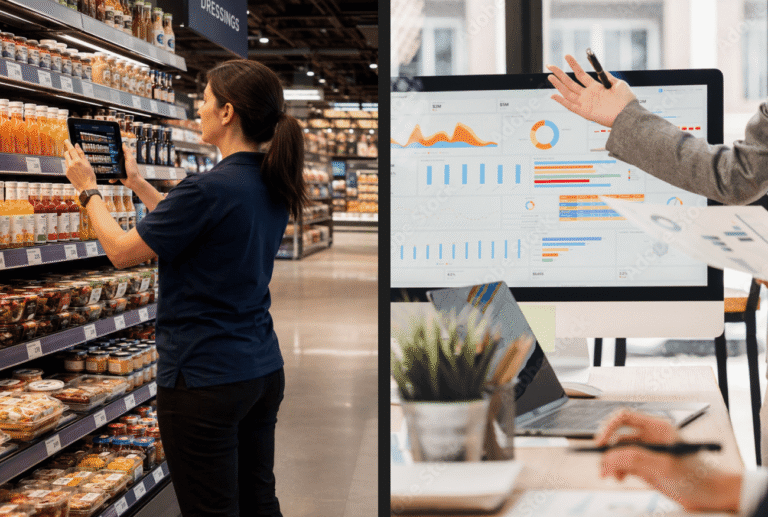


Every grocery store is a carefully engineered decision-making environment. The width of an aisle, the height of a shelf, the product sitting at eye level as a shopper rounds a corner—none of it happens by accident.
Product placement in stores is one of the most powerful and most underleveraged levers available to grocery store owners and CPG brands alike. The difference between a shelf that sells and one that sits often comes down to where things are placed, and why.
Effective grocery store product placement has become increasingly important as shopper behavior evolves and competition for shelf space intensifies. Retailers and brands that pair strategic merchandising with real-time execution insights are better positioned to maximize visibility, influence purchasing decisions, and drive consistent growth from every square foot of retail space.
Key Takeaways
- Where a product lives on the shelf directly shapes consumer behavior, so strategic placement at eye level and in high-traffic zones can meaningfully boost sales without changing the product itself
- Grocery store owners and CPG brands that treat product placement as an ongoing discipline consistently outperform those who rely on static planograms and infrequent audits
- Cross-merchandising and complementary product placements increase average order value by making it easier for shoppers to buy more in a single visit
- Even the strongest merchandising strategy fails when products are misplaced, out of stock, or inconsistently executed at the store level
8 Grocery Store Product Placement Strategies That Increase Sales
Grocery store product placement works because it influences shoppers at the exact moment they’re making purchasing decisions. Small changes in visibility, accessibility, and context can have an outsized impact on what customers notice, consider, and ultimately buy.
The following strategies are among the most effective ways to increase grocery sales through smarter merchandising. While each tactic serves a different purpose, they all share a common goal: putting the right products in front of the right shoppers at the right time.
1. Own the Golden Zone With Eye-Level Placement
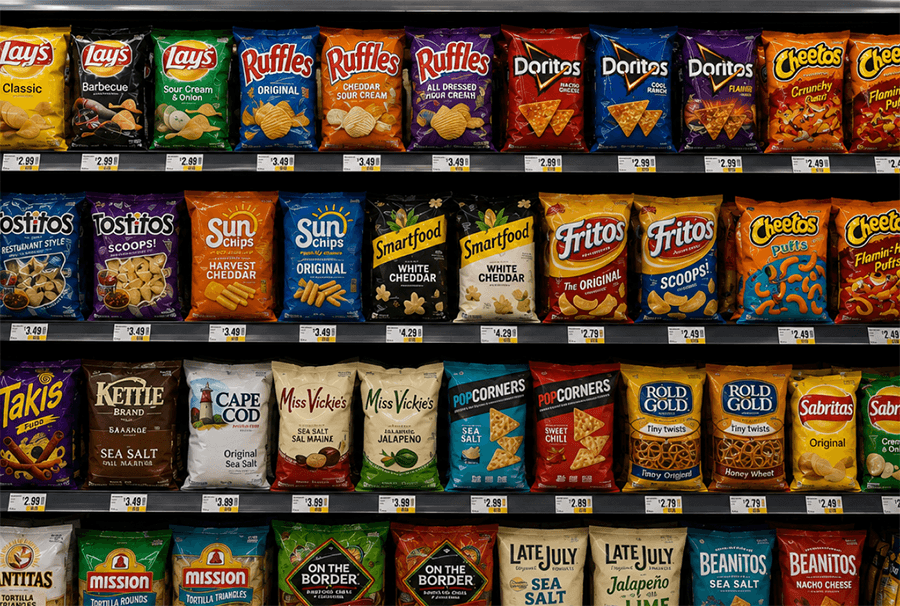
The shopper’s eye is your most valuable piece of retail real estate. Products positioned at eye level capture attention first, require the least effort to reach, and consistently outperform products placed on higher or lower shelves.
This prime shelf space should be reserved for products that benefit most from additional visibility. New product launches, seasonal promotions, high-margin items, and priority SKUs often see stronger results when placed within the shopper’s natural line of sight.
Meanwhile, lower shelves can be used for bulk packages, value-oriented products, and staple items that shoppers actively seek out regardless of placement. The goal isn’t to give every product equal visibility. It’s to give your most important products the best opportunity to be seen.
The principle is simple: eye level is buy level. When visibility increases, sales often follow.
2. Maximize Shelf Visibility With Block Merchandising
Block merchandising groups related products together to create a larger, more visually cohesive presence on the shelf. Rather than scattering products throughout a category, retailers create a unified visual block that immediately draws the shopper’s attention.
Block merchandising can be organized around:
- Brand families
- Product categories
- Flavor varieties
- Package formats
- Color groupings
This approach makes it easier for shoppers to find what they’re looking for while helping brands command more attention within a category. Instead of competing with scattered facings throughout the shelf, products work together to create a stronger visual impact.
Block merchandising also reduces visual clutter and improves shelf navigation. When shoppers can quickly identify a brand or product family, they spend less time searching and more time buying.
For retailers and CPG brands alike, a well-executed block can transform shelf space from a collection of individual products into a highly visible merchandising asset.
3. Capitalize on In-Store Waiting Time With Impulse Zones
Few areas of a grocery store generate more unplanned purchases than the checkout lane. As shoppers wait to pay, they’re presented with one final opportunity to add items to their basket, often with little deliberation.
Impulse zones work best when they feature products that are inexpensive, convenient, and easy to justify as an add-on purchase.
Common examples include:
- Candy and gum
- Single-serve beverages
- Salty snacks
- Gift cards
- Travel-size essentials
The key is restraint. Overloading checkout areas with too many products can create visual clutter and reduce the effectiveness of the display. A focused assortment built around a handful of high-performing items typically generates stronger results than trying to merchandise everything at once.
When used strategically, impulse zones turn idle waiting time into incremental revenue.
4. Use Kid-Level Merchandising to Influence Family Purchases
Not every purchase decision is made by the person pushing the cart.
Kid-level merchandising places products within a child’s line of sight, making them more likely to notice, engage with, and request specific items during a shopping trip. This tactic is commonly used for products aimed at younger shoppers, including cereals, snacks, juice boxes, and other family-oriented categories.
Products that perform well in kid-level placements often share a few characteristics:
- Bright, recognizable packaging
- Familiar characters or branding
- Easy-to-grab package sizes
- Strong appeal to children and families
When executed thoughtfully, kid-level merchandising can increase visibility and drive additional purchases without disrupting the overall shopping experience. Many retailers also balance these placements with healthier options, allowing them to appeal to both children and parents.
In many categories, the shopper making the request isn’t the shopper holding the wallet. Kid-level merchandising acknowledges that reality and uses it to drive incremental sales.
5. Drive Traffic Through the Store With Destination Items
Some products are so essential that shoppers will seek them out regardless of where they’re located. Grocery retailers often use destination items like milk, eggs, bread, and other household staples to influence traffic flow throughout the store.
Rather than placing these products near the entrance, many stores position them toward the perimeter or rear of the building. This encourages shoppers to move through multiple departments before reaching the items they came for.
Along the way, customers are exposed to promotional displays, seasonal merchandise, new product launches, and categories they may not have otherwise visited. Every additional aisle or department creates another opportunity for discovery and incremental purchases.
The strategy isn’t about making shopping more difficult, but about creating a store layout that naturally increases product exposure without disrupting the customer experience.
6. Increase Basket Size With Cross-Merchandising
Cross-merchandising places complementary products together to encourage additional purchases and increase basket size. Rather than asking shoppers to visit multiple aisles, retailers make related items easier to discover in a single location.
Common examples include:
- Tortilla chips paired with salsa or guacamole
- Pasta displayed alongside pasta sauce
- Tequila merchandised with limes and cocktail mixers
- Crackers paired with specialty cheeses
- Marshmallows displayed near graham crackers and chocolate
These pairings work because they reduce the mental effort required to complete a purchase. Seeing one product often reminds shoppers of another item they intended to buy—or one they hadn’t even yet considered.
The most effective cross-merchandising strategies feel helpful rather than promotional. When products are paired in ways that make sense, shoppers are more likely to add multiple items to their basket, which increases sales without creating friction.
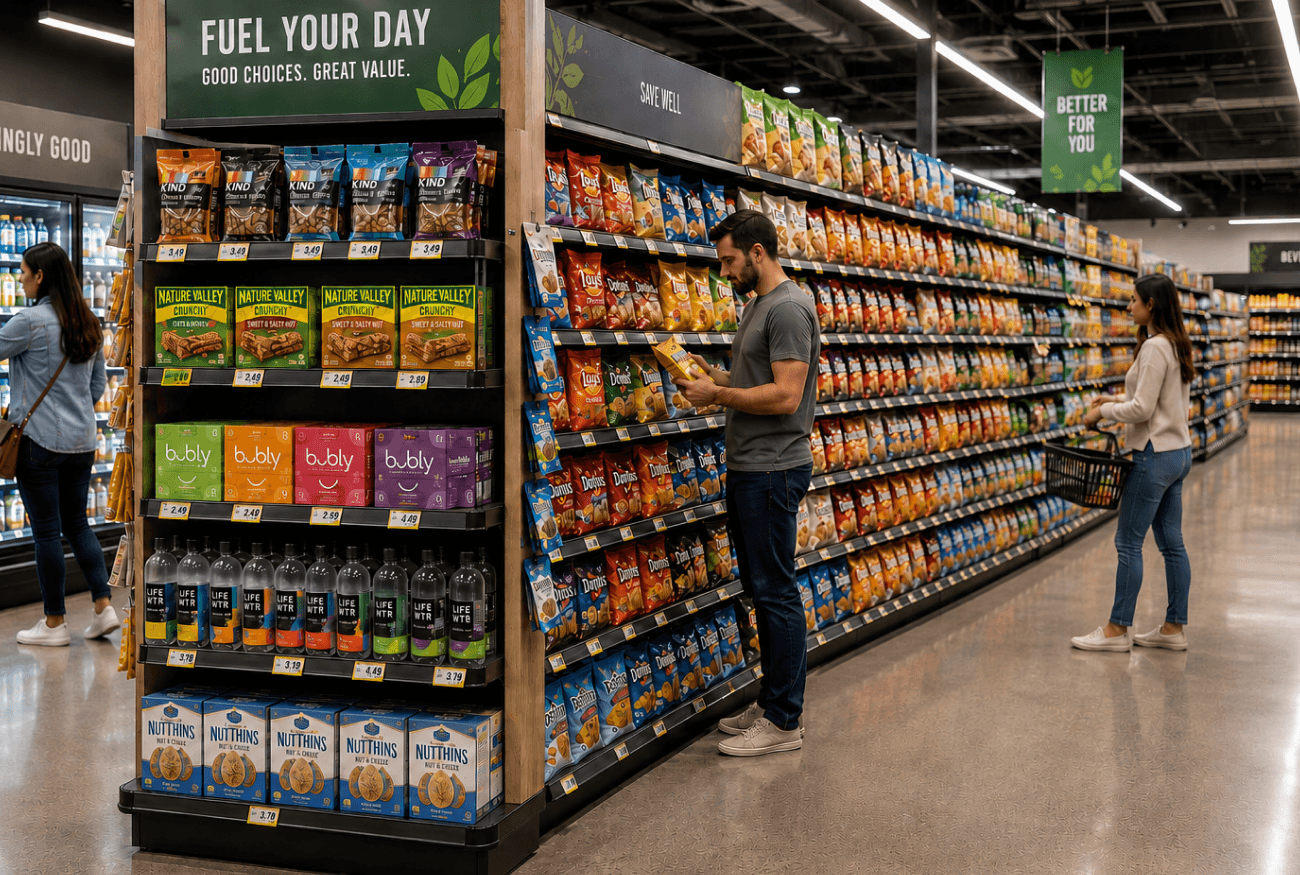
7. Dominate High-Traffic Areas With End Caps and Shippers
End caps and floor displays occupy some of the most visible space in a grocery store. Positioned along major traffic paths, these displays capture attention from shoppers who may never enter a particular aisle, making them valuable tools for increasing product visibility and driving incremental sales.
The most effective displays are typically built around:
- Seasonal events and holidays
- New product launches
- Promotional campaigns
- Complementary product bundles
- Limited-time offers
End caps are particularly effective because shoppers often perceive them as featuring products that are new, popular, or specially promoted—even when the items are sold at their regular price.
Visibility alone, however, isn’t enough. These high-value placements only perform when they remain fully stocked, properly merchandised, and consistent with the intended display strategy. An empty or poorly maintained display can quickly undermine the value of the space.
When executed well, end caps and shippers act as in-store billboards, helping products stand out in an increasingly crowded retail environment. This is why end caps remain one of the most effective forms of product placement in stores.
8. Create a Strong First Impression With the Decompression Zone
Grocery store placement begins the moment a shopper walks through the door. The first few feet inside a store are known as the decompression zone, where shoppers transition from the outside world into the shopping experience.
Because customers are still orienting themselves, this area is rarely the best place for dense promotional messaging or complex product displays. Instead, leading grocery retailers use the space immediately beyond the decompression zone to create a positive first impression.
Common approaches include:
- Fresh produce displays
- Floral arrangements
- Seasonal features
- Visually appealing promotional displays
These placements help establish the tone for the shopping trip while encouraging customers to continue exploring the store.
Why Great Placement Strategies Fail at the Shelf
The psychology behind product placement is well established, but the challenge is ensuring those strategies are executed consistently across every store.
A product can’t benefit from eye-level placement if it’s stocked on the wrong shelf, a cross-merchandising display can’t increase basket size if it’s missing half the products, and even the most carefully planned end cap loses its value when it sits empty for days at a time.
Common execution issues include:
- Products stocked outside their intended location
- Empty shelves and out-of-stocks
- Missing promotional displays
- Incomplete cross-merchandising placements
- Planogram non-compliance
These issues create a visibility problem for both retailers and brands. When products aren’t displayed as intended, sales can suffer, and teams may incorrectly assume the strategy itself failed.
The challenge becomes even greater at scale. Manual store audits require significant time and effort, making it difficult to verify that merchandising standards are being followed consistently across every location. Without reliable visibility into shelf conditions, even the strongest product placement strategy can struggle to deliver its full potential.
How Field Teams Secure Placement ROI with Smart Automation
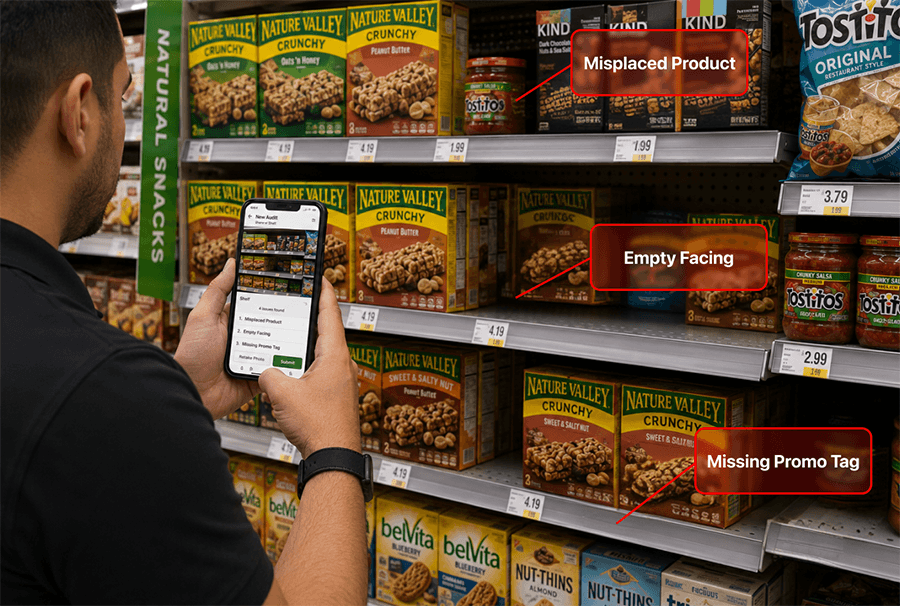
Maintaining merchandising standards across dozens, hundreds, or even thousands of stores requires more than periodic audits. Field teams need a reliable way to verify that products are placed correctly, displays remain compliant, and out-of-stocks are addressed before they impact sales.
Effective product placement in stores depends on accurate execution and visibility. Modern retail execution platforms like GoSpotCheck by FORM help bridge the gap between merchandising strategy and in-store reality by giving field reps standardized workflows for store visits, audits, and compliance checks.
Benefits of a data-driven approach include:
- Faster shelf and display audits
- More consistent execution across locations
- Faster identification of out-of-stocks
- Improved planogram compliance
- Greater visibility into store-level performance
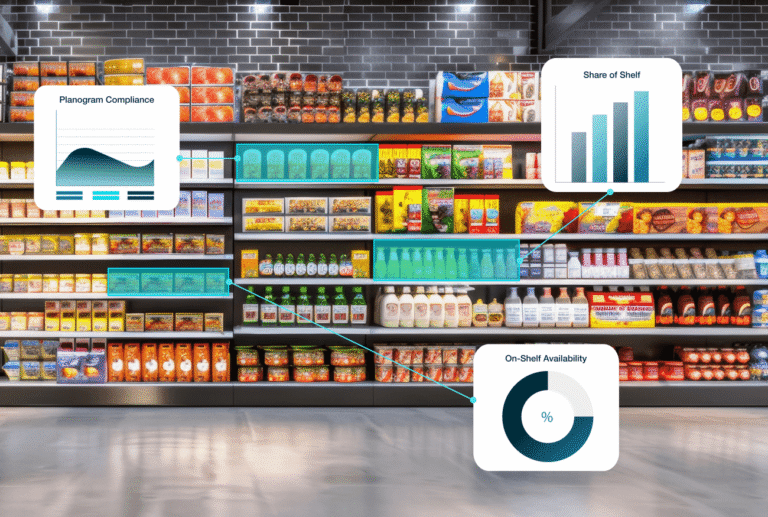
Advances in image recognition have made these audits even more efficient. Rather than manually reviewing every shelf, field reps can capture a photo and receive insights into issues such as:
- Misplaced products
- Empty facings
- Pricing discrepancies
- Missing displays
- Share-of-shelf compliance
Combined with photo reporting, these capabilities give merchandising teams near real-time visibility into store conditions. Leaders can verify that end caps are properly executed, promotional displays are live, and product placement strategies are being implemented as intended.
The result is a faster, more scalable approach to retail execution that helps retailers protect the return on their merchandising investments.
Transform Your Merchandising Strategy into Real-World Revenue
Strategy alone isn’t enough. The retailers and brands that see the strongest results consistently execute their merchandising plans at the shelf level, ensuring products are placed correctly, displays remain compliant, and revenue opportunities aren’t lost to execution gaps.
Stop losing revenue to misplaced products, empty shelves, and incomplete displays. Schedule a demo today to see how FORM’s AI-powered retail image recognition technology helps field teams verify execution, improve compliance, and turn merchandising strategies into measurable revenue.
Frequently Asked Questions
How often should grocery store product placements be updated?
High-visibility placements such as end caps, seasonal displays, and promotional features should be reviewed regularly and updated as campaigns change. Core shelf layouts typically change less frequently, but retailers should continuously evaluate sales performance, shopper behavior, and category trends to identify opportunities for optimization.
What is a planogram, and why does it matter?
A planogram is a visual guide that specifies where products should be placed on a shelf or display. It helps retailers create consistent shopping experiences, maximize shelf space, and ensure key products receive the visibility intended by merchandising teams. Without consistent planogram execution, even well-designed placement strategies can underperform.
Which grocery categories benefit most from product placement strategies?
While nearly every category can benefit from strategic merchandising, impulse-driven categories such as snacks, beverages, confectionery, and seasonal products often see the greatest impact. Categories with strong complementary purchasing behaviors, such as chips and dips or pasta and sauce, can also generate significant gains through thoughtful placement.
How can retailers measure the success of a product placement strategy?
The success of product placement in stores is typically measured through a combination of sales lift, basket size, product velocity, share of shelf, and display compliance. Comparing performance before and after a placement change can help retailers determine whether a strategy is improving visibility, increasing purchases, and contributing to overall revenue growth.