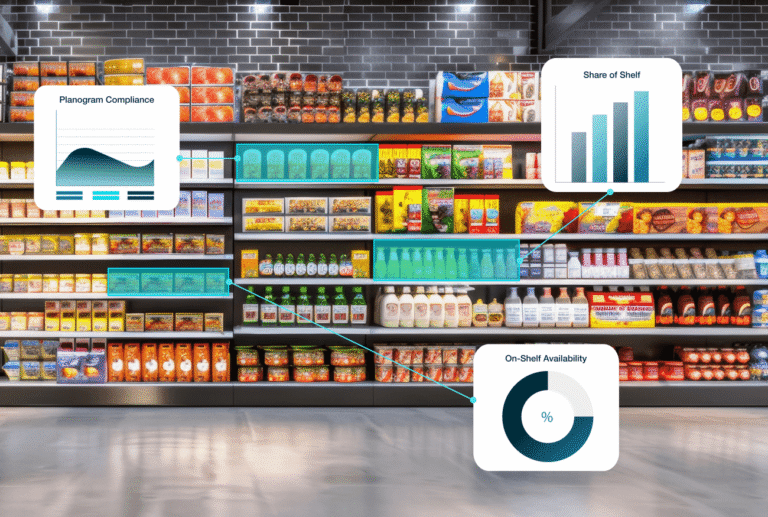


Conducting a Perfect Retail Audit: How Image Recognition Simplifies the Process

Image Recognition for the Perfect Retail Audit

Key takeaways

  • Manual retail audits introduce human error, consume significant rep time, and produce stale data that arrives too late for meaningful corrective action
  • Retail image recognition software replaces subjective manual counting with AI-powered, SKU-level shelf analysis
  • A perfect audit is defined not by flawless store conditions, but by a consistent, objective, and action-linked process
  • FORM’s “See it, Fix it, Prove it” workflow connects AI detection, automated task management, and photo verification into a single closed-loop system that turns raw shelf images into executive-level analytics and measurable revenue impact.

There’s a version of your store execution that lives in presentations, planograms, and pipeline forecasts. Then there’s what’s actually on the shelf. For most consumer goods brands, the gap between those two realities is wider than anyone would like to admit. Products are out of stock, price tags are missing, promotional displays are set up incorrectly, or not set up at all.

Retail audit image recognition changes that equation. In the sections that follow, you’ll learn what a retail audit typically covers, what separates a good audit from a great one, and how to run an AI-powered audit workflow from start to finish — including how FORM helps brands close the loop between insight and correction.

What does a retail audit typically cover?

At its core, a retail audit is a structured store check that answers one question: Is what’s happening on the shelf matching what was planned?

For consumer packaged goods (CPG) brands and retailers, audits are the primary mechanism for verifying that in-store execution aligns with brand standards, retailer agreements, and promotional commitments. The scope of those checks varies by brand and category, but most retail store audits cover some combination of the following:

  • On-shelf availability and out-of-stocks: Confirming that products are present, properly stocked, and not creating voids that competitors can fill.
  • Planogram compliance: Verifying that product placement on the shelf matches the agreed-upon planogram (POG), including correct positioning, sequencing, and facings.
  • Pricing accuracy and shelf tag presence: Checking that price tags are present, correctly placed, and reflect the current pricing strategy, including any promotional pricing.
  • Promotion execution: Confirming that promotional displays, endcap features, signage, and secondary placements are set up correctly and in the right location.
  • Share of shelf and facings: Measuring how much shelf space your brand occupies relative to competitors, which directly impacts visibility and sales velocity.
  • Competitive intelligence: Capturing competitor pricing, placement, and promotional activity for category-level context and strategy.

Running through this retail audit checklist tells you what’s happening in-store. But checking boxes is only half the battle. What separates a useful audit from a genuinely impactful one comes down to how the process is designed and what happens after data collection.

What makes a retail audit “perfect”?

A perfect audit isn’t about flawless execution in every store. It’s about building a process reliable enough that the data you get back is worth acting on. That means aiming for three things:

  • Consistency: Every rep, in every region, across every retailer banner, follows the same standards and captures the same information. Without consistency, you can’t compare performance across territories or identify true root causes. You’re just comparing one person’s interpretation of “good” against another’s.
  • Objectivity: Results are backed by evidence, not memory or goodwill. When a rep logs a “pass” for planogram compliance, there should be a shelf image behind it. Objective data is what earns credibility in category reviews, joint business planning sessions, and internal performance discussions.
  • Clear action plans: The audit doesn’t end when data is collected. Issues are converted into corrective tasks fast enough that reps can address them before leaving the store. An audit that identifies a problem two days after the store visit doesn’t drive shelf improvement; it produces a report.

The high cost of manual retail auditing

Manual retail audits are expensive in ways that don’t always show up on a budget line. The problems compound across three areas:
Problem What it looks lik Why it matters
Time Reps spend 20+ minutes per store section manually counting facings, checking price tags, and documenting displays That’s productive time taken away from selling, relationship-building, and fixing problems
Data quality Miscounts, inconsistent interpretations, survey fatigue, and “pencil whipping” — logging expected results rather than actual ones Leadership is making decisions based on data that may not reflect what’s really on the shelf
Stale reporting A Monday store visit becomes a Wednesday or Thursday report by the time notes are submitted and reviewed Shelf conditions change before anyone can act — promotions reset, out-of-stocks persist, opportunities are missed

For VPs of Sales and Retail Operations Managers, these problems compound further at scale. Adding headcount to run more audits increases cost without improving data reliability. You end up with more inputs, more variability, and the same fundamental challenge: not knowing what’s actually happening in your stores.

How does image recognition technology help with auditing?

Image recognition for retail transforms the audit from a manual, judgment-dependent process into a structured, evidence-backed one. The workflow follows three stages, each of which addresses a specific failure point in the traditional approach. A three-step flowchart showing how AI image recognition transforms retail data capture into instant KPIs.
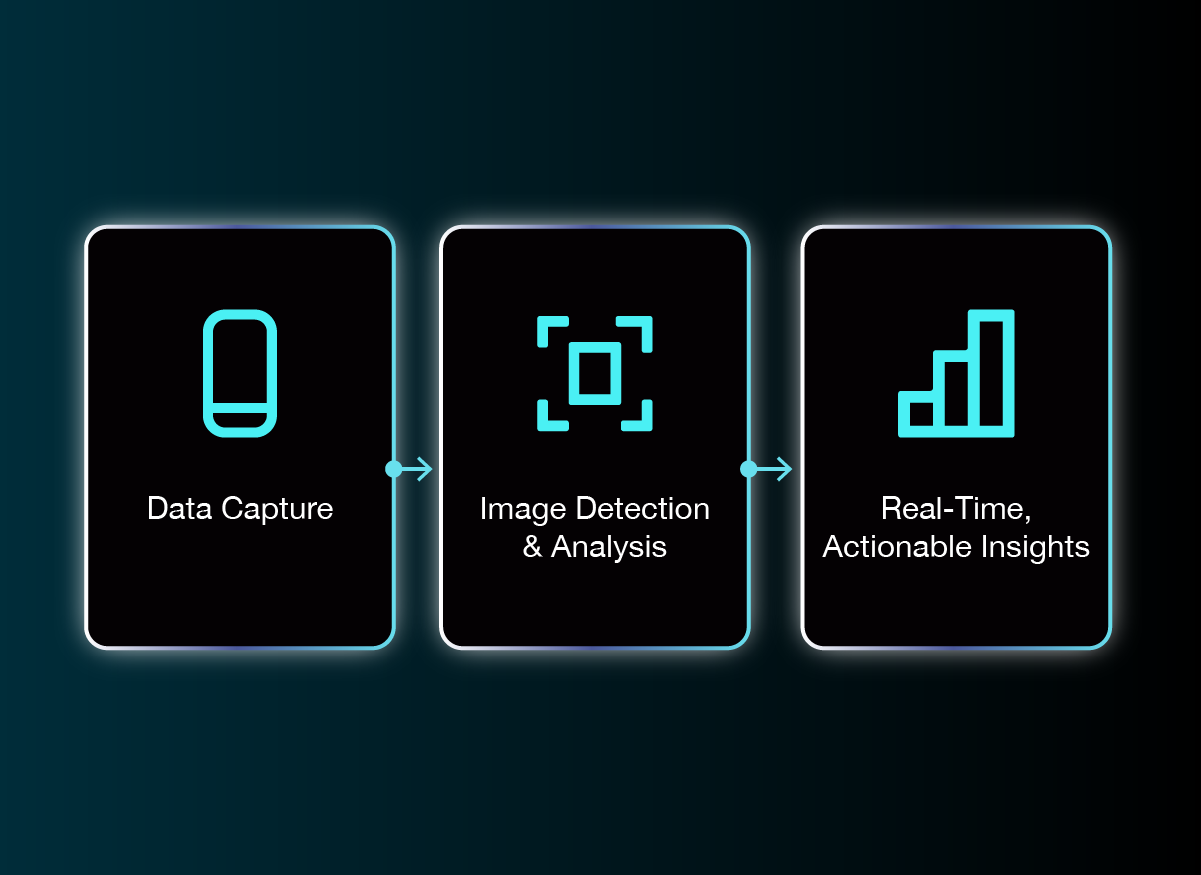
Data capture

Instead of manually recording shelf conditions, reps use a standard mobile device to photograph shelves, displays, coolers, and endcaps. This takes seconds rather than minutes per section. The photo itself becomes the audit record, removing subjectivity from the data collection step entirely.

AI processing

AI-powered image recognition software analyzes each photo at the SKU level. It identifies every product on the shelf, verifies placement against the planogram, checks for price tag presence, and flags promotional compliance gaps. What a rep might spend 20 minutes counting manually, the software processes in seconds, with SKU-level precision that human observation often can’t match.

Instant conversion to KPIs

Raw shelf images don’t stay raw for long. The system converts them into actionable metrics: Share of Shelf (SOS), On-Shelf Availability (OSA), planogram compliance rates, out-of-stock counts, and competitive pricing benchmarks. By the time a rep walks to the next aisle, the data from the last one is already in a dashboard. Beyond speed, retail image recognition technology creates an audit trail that manual methods simply can’t provide. Every result is tied to a timestamped, geotagged photo. Leadership can see not just what was reported, but what was actually on the shelf, when, and where. That image-backed evidence is what converts a retail audit from a report into a verifiable record, reducing compliance risks and giving field teams and headquarters a single, shared source of truth.

Steps to executing a perfect audit with AI

AI doesn’t automatically produce a better audit. The technology amplifies whatever process sits underneath it. A poorly designed audit workflow, run through image recognition software, still produces inconsistent or incomplete data. The goal is to build the right structure first, then automate it. Here’s how that looks in practice.
1. Standardize the audit before you automate it

Before any AI touches a shelf photo, your team needs to agree on what “good” looks like. Define your planogram rules, identify which promotional requirements must be verified at each store, and establish clear pass/fail criteria for pricing and tag compliance. Then standardize which photos reps are required to capture and in what order. This step is where consistency across reps, regions, and retailer banners gets built into the process. When every rep follows the same capture protocol, the AI is analyzing comparable inputs, and the resulting data can be meaningfully compared across territories. Without this foundation, you’re feeding different inputs into the same system and wondering why the outputs don’t align.

2. Standardize the shelf set

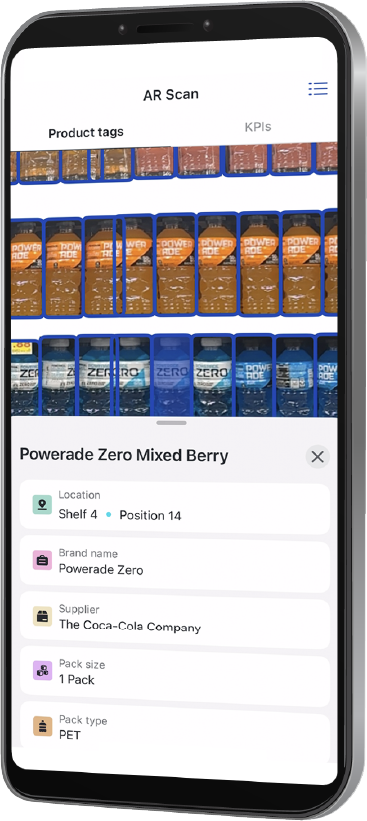
Use AI-powered planogram compliance tools to verify the shelf is set exactly as designed. The system compares the captured shelf image against the approved POG, flagging deviations in product placement, facing counts, and sequencing. This removes the need for a rep to manually interpret whether a shelf “looks right,” replacing subjective judgment with a structured, pixel-level comparison. For Merchandising Directors, this step is particularly valuable. It provides SKU-level confirmation that retail execution matches the plan agreed upon with the retailer, which is critical for category review discussions and joint business planning. GoSpotCheck's image recognition software automatically identifying and counting SKUs on a retail shelf.

3. Automate SKU-level counts

The clipboard is the slowest, least reliable tool in a field rep’s kit. Shelf image recognition replaces it entirely. When a rep photographs a shelf section, the AI identifies every product present, counts facings, measures share of shelf, and flags any voids or out-of-stocks, all from a single image. What typically takes hours per section takes seconds. This matters beyond time savings. Automated SKU-level counts eliminate the variability that comes from different reps counting the same shelf differently. One person’s “two facings” is another’s “one and a half.” The AI sees what the camera sees and consistently reports it. That accuracy is what makes the downstream data worth trusting.

4. Immediately trigger corrective tasks

This is where a digitized store audit separates itself from a traditional one. When image recognition detects a compliance gap, whether it’s a missing price tag, a wrong product in a POG slot, or an endcap that wasn’t set up for a promotion, the system automatically assigns a corrective task to the rep before they leave the store. That real-time, automated workflow is what transforms an audit from a documentation exercise into an execution tool. The rep doesn’t have to wait for a manager to review a report, identify the issue, and follow up. The system sees it, flags it, and puts the fix in the rep’s hands immediately. The result is faster corrections, fewer repeat issues, and shelf conditions that actually reflect your brand standards.

5. Verify improvements

Assigning a task is not the same as closing the loop. After a rep corrects an issue, the system requires a follow-up photo to verify the fix. That second image becomes the evidence that the corrective action was completed, tying the full audit cycle — detect, assign, fix, verify — to visual proof rather than self-reported completion. For operations leaders, this verification step is what turns audits into accountable processes. You’re not relying on a rep’s word that a shelf was corrected. You’re looking at before-and-after photos with timestamps, giving you the evidence needed to demonstrate compliance to retail partners and track trends in execution quality over time.

Bridging the gap with FORM: from insight to action

Running the steps above is significantly easier when the tools behind them are built to work together. FORM connects image recognition, task management, and analytics into a single platform, so the audit cycle from detection to correction to verification happens within one workflow rather than across multiple disconnected systems. The guiding principle is simple: See it, Fix it, Prove it.

Here’s how that plays out across FORM’s core capabilities:

  • AI detection at the shelf edge: FORM’s image recognition app analyzes shelf photos at the SKU level, identifying out-of-stocks, planogram deviations, missing price tags, and promotional compliance gaps in seconds. Reps get immediate visibility into what needs attention without manual counting or interpretation.
  • Automated planogram compliance: Teams can distribute digital planograms directly to the field, and the AI instantly compares the live shelf photo against that standard. The system flags misplaced items, missing facings, and competitor encroachment, prompting the rep to correct the shelf layout and capture a verification photo before leaving the store.
  • Customizable dashboards and scoring: Raw shelf images are converted into executive-level analytics, including Perfect Store scores, regional performance comparisons, and trend data across retailers and categories. Leaders can see execution health at the level that matters to them, whether that’s a single SKU or a national program.
  • Offline-first reliability: Retail audit image recognition works in low-connectivity environments like large grocery aisles and backrooms. FORM’s offline-first design means data is captured regardless of signal strength and synced automatically when a connection is restored, so no store visit is lost to a “dark zone.”
  • Integrated photo organizing with PhotoWorks: Every image captured during an audit is automatically organized, tagged, and associated with the relevant store, visit, and task within PhotoWorks. Leaders can pull up shelf conditions for any location at any time, without digging through folders or chasing reps for attachments.

The result is a field team that spends less time on admin and more time selling — audit time that once consumed 30 to 40 minutes per store can often drop to under ten. For category reviews and joint business planning, you’re bringing real-time compliance data and documented execution history to the table instead of manually compiled spreadsheets. And by catching and correcting out-of-stocks and promotional gaps while the rep is still in the store, you’re recovering revenue that a traditional audit would have missed entirely.

The future of retail execution is automated

The brands consistently winning at the shelf have moved past manual guesswork. They’ve replaced clipboard-dependent store audits with AI-powered precision that captures shelf conditions faster and more accurately, with the evidence trail that modern retail execution demands. Retail audit image recognition isn’t a futuristic concept; it’s a practical operational upgrade that many CPG companies and consumer goods brands have already made.

The shift this enables is from reactive to proactive. Traditional auditing tells you what went wrong after the fact. An AI-powered workflow catches issues while the rep is still in the store, triggers a correction immediately, and verifies the fix before they leave. Audit, fix, and verify becomes the standard cycle, rather than a best-case scenario.

Ready to see it in action? Take a tour of the GoSpotCheck platform to see how FORM helps field teams execute faster, audit smarter, and close the loop between insight and action.

Latest Blogs

Book a Demo

Schedule a live demo to see our technology in action and learn how it can power productivity from the field.