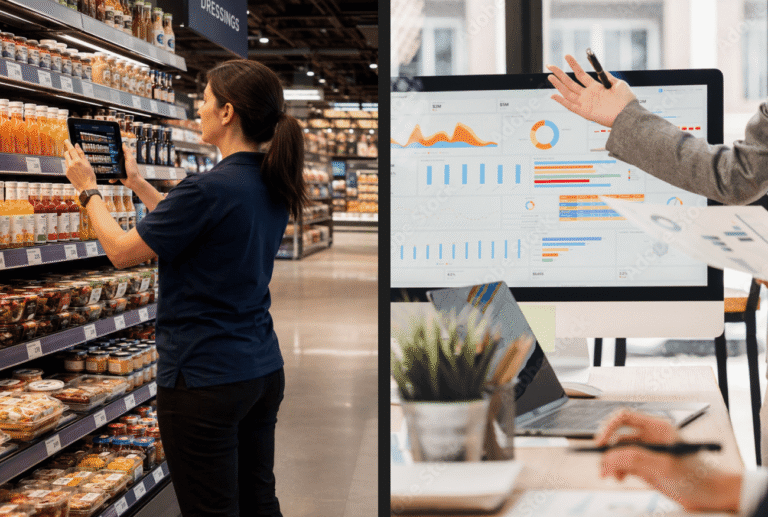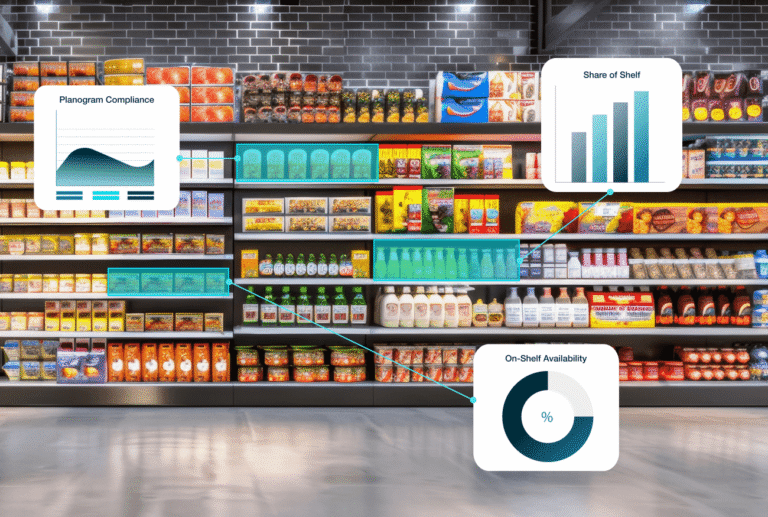


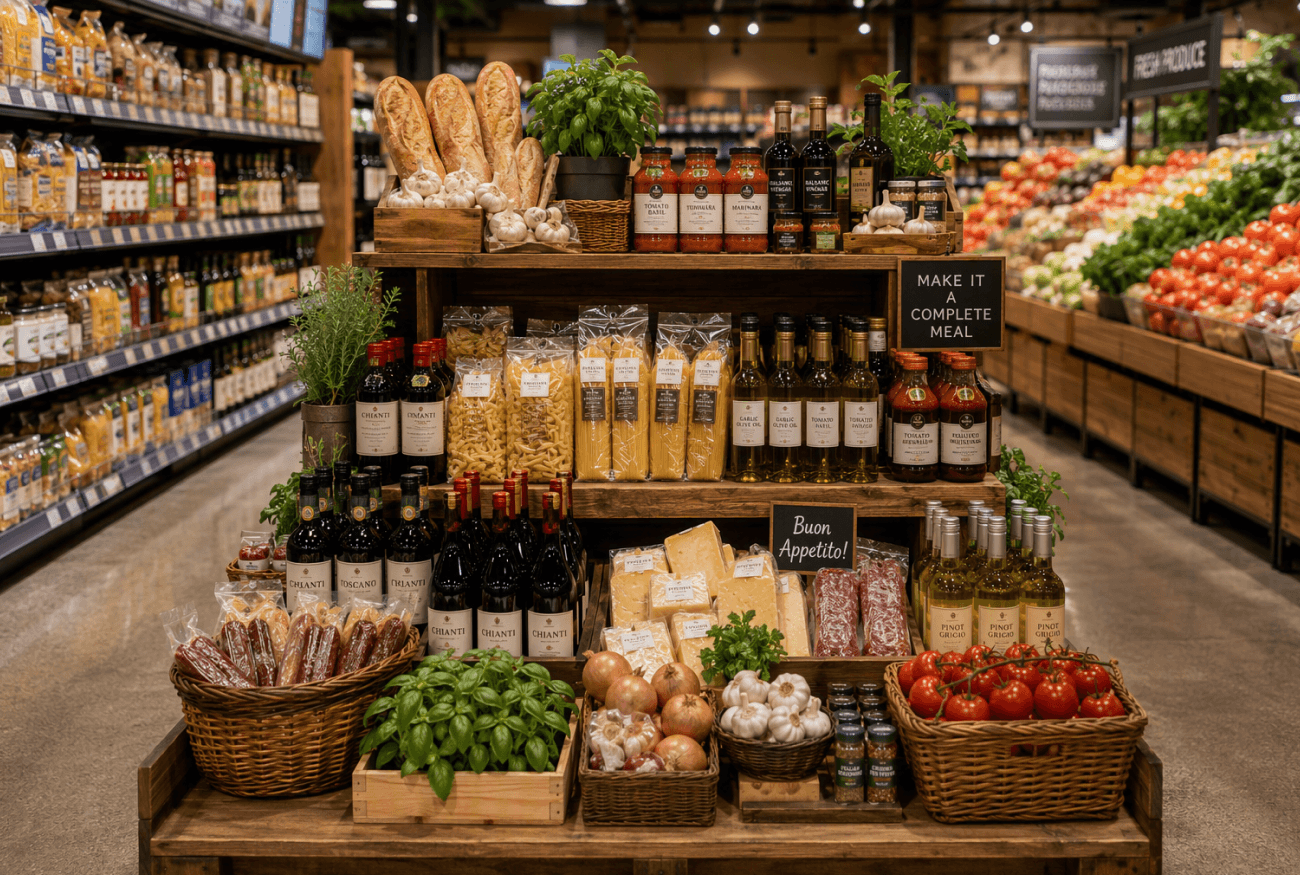
A shopper walks into a grocery store for pasta and leaves with tomato sauce, parmesan, and a bottle of red wine they didn’t plan on buying. That’s not an accident. It’s cross-merchandising working exactly as intended.
But the strategy is only as good as its execution. In reality, secondary displays get moved, dismantled, or restocked incorrectly by store associates, and field reps show up to find their carefully negotiated placements gone. And without the right tools to verify and defend those spots, the investment behind them quietly goes to waste.
This guide covers what cross merchandising is, how you can do it effectively and, critically, how to make sure your displays actually stay on the shelf.
Key Takeaways
- Cross-merchandising is the retail strategy of placing complementary products from different categories together to encourage additional purchases and increase basket size
- The most effective strategies solve a real shopper problem by grouping products around a meal solution, seasonal moment, or lifestyle need rather than random adjacency
- Secondary product placement is high-value but fragile—displays get moved or dismantled by store staff, often without anyone at HQ knowing
- Offline-capable mobile tools and real-time photo reporting are what separate cross-merchandising strategies that pay off from those that don’t
What is Cross-Merchandising?
Cross-merchandising is the retail practice of displaying complementary products from different categories together in the same place to encourage customers to make additional purchases they hadn’t planned on.
It looks different depending on the category, but the logic stays consistent:
- Groceries: tortilla chips placed next to salsa, or pasta grouped with sauce and garlic bread
- Beauty items: skincare tools displayed alongside the cosmetics they’re designed to apply
- Clothing stores: accessories like belts or scarves placed near the t-shirts and outfits they complete
- Home goods store: seasonal décor grouped with the tools needed to set it up
In each case, your goal is the same: to shortcut the customer’s decision-making process. Rather than sending a shopper to three different aisles to assemble everything for taco night, you group the shells, salsa, and seasoning together. This succeeds in solving a need before they’ve even thought to look for it.
This is what separates cross-merchandising from traditional category merchandising, where all coffees sit together regardless of what a shopper might pair them with. Cross-merchandising asks: what does your customer need next, and how do you put it in their path?
Done well, this model increases sales, strengthens customer loyalty, and makes the overall shopping experience feel seamless rather than scattered.
Best Practices for High-ROI Cross-Merchandising
Not every product pairing works, and the strategies that actually move the needle share a common thread: they solve a real problem for your customer rather than forcing an arbitrary connection between different products.
The most effective cross-merchandising displays make shopping easier by connecting products that customers naturally need together. Here are four proven strategies you can use to drive add-on purchases and increase basket size:
1. Build Complete Meal Solutions and Thematic Pairings
The simplest cross-merchandising strategies answer the question “what’s for dinner?” before a shopper has to think about it. By placing pasta, tomato sauce, and garlic bread together, you turn three separate decisions into one convenient purchase.
The same logic extends to seasonal items, as well:
- BBQ tools, ketchup, and mustard are grouped together heading into summer
- Hot cocoa is placed near holiday baking supplies in winter
- Sunscreen and beach towels are paired with coolers in late spring
Each pairing creates a logical connection between products shoppers were already likely to buy—just not necessarily in the same trip.
2. Leverage the High-Traffic Fresh Perimeter
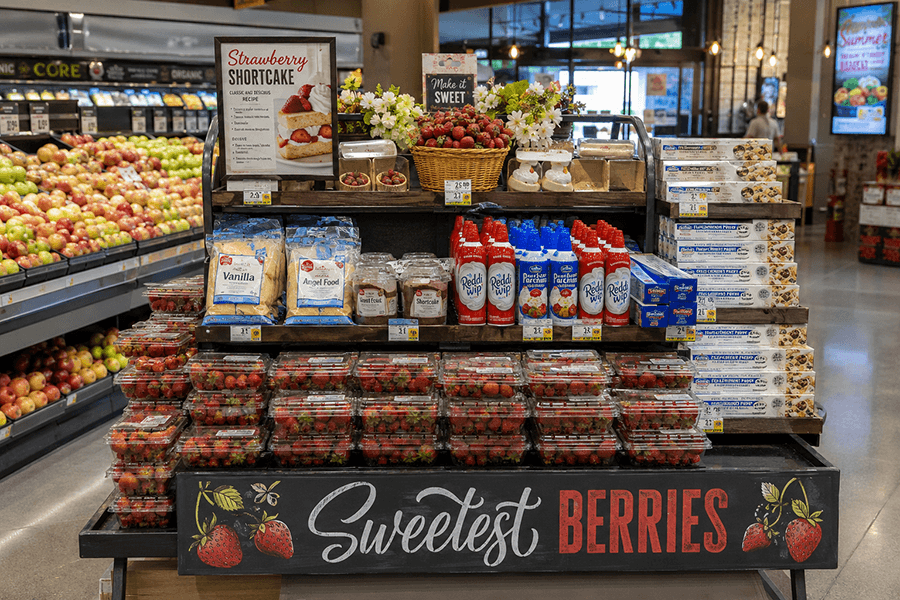
Produce and meat departments see more foot traffic than almost any other part of your store, making them prime real estate for cross-selling complementary products. Shortcake and whipped cream next to fresh strawberries, or balsamic glaze near the tomatoes, are great examples of pairings that feel obvious in the moment, and promote unexpected purchases.
Keeping these placements stocked and intact matters just as much as planning them in the first place—and auditing the fresh perimeter regularly is what ensures this strategy survives contact with a busy shift, rather than quietly disappearing after the first restock.
3. Utilize Off-Shelf Fixtures for Secondary Placements
Endcaps, clip strips, and standalone corrugated shippers pull attention outside the main aisle flow, which is exactly where secondary product placement earns its value. These fixtures work because they catch the attention of a shopper without getting in their way.
The right fixture depends on the category and the products involved:
- Clip strips for small, lightweight add-ons near a primary product
- Endcaps for seasonal or thematic groupings that need more visual real estate
- Standalone shippers for promotional pushes tied to a specific campaign
Choosing the right merchandising display helps determine whether your secondary placement drives add-on sales or creates a “clutter trap”.
4. Avoid the “Clutter Trap” and Brand Confusion
Not every adjacency makes sense. Pairing unrelated items, like paper towels next to bananas, confuses your shoppers and signals a disorganized store rather than a deliberate strategy.
The rule holds up across retail business categories, from grocery to clothing store floors and beyond: less is more. A display crowded with too many popular products competing for attention gets walked past entirely. One clear idea, executed cleanly, will always outperform a crowded shelf trying to do five things at once.
The Operational Nightmare: Why Secondary Displays Fail
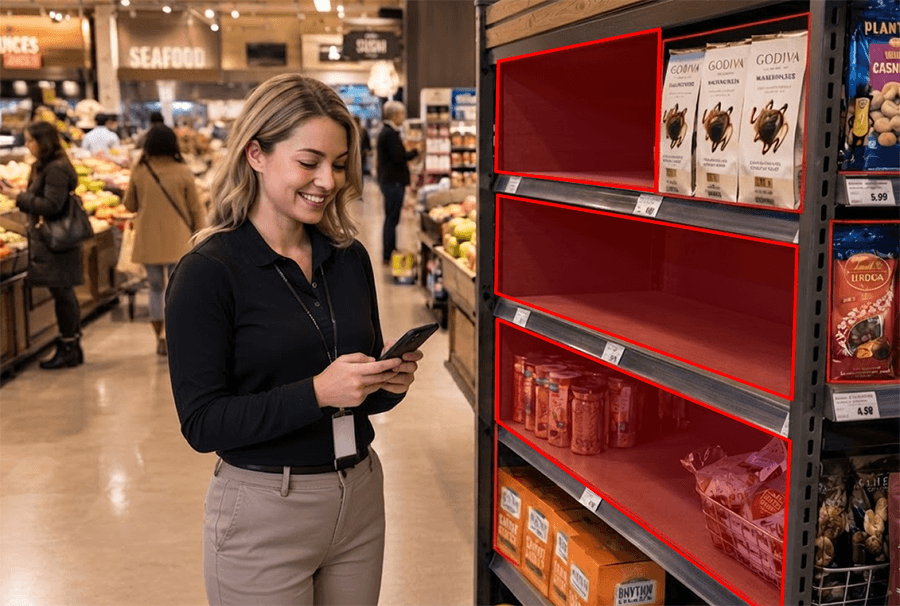
You’ve negotiated the placement, built the display, and stocked the shelf exactly as planned. Then a field rep walks into the store a week later and finds the endcap gone, the clip strip removed, and the secondary product placement you paid for nowhere in sight.
This happens more often than most teams realize, and it’s rarely malicious. A store associate needs space for an incoming delivery, a new promotion takes priority, or a display simply gets in the way of a routine restock. Whatever the cause, your cross-merchandising investment quietly disappears—and unless someone catches it in person, you have no way of knowing.
The problem compounds when your field team is relying on manual audits to catch these gaps:
- Reps can only verify what they physically see during a scheduled visit, leaving days or weeks of blind spots in between
- Paper checklists and spreadsheets make it easy for a missing display to go unreported, especially across a large multi-store territory
- By the time sales data reflects the lost placement, the trade spend behind it is already gone
Grocery stores add another layer of difficulty: center aisles, backrooms, and refrigerated sections are notorious for poor cellular reception. If your reps depend on a cloud-only app to log what they find, a dead zone can mean the difference between catching a problem in real time and not finding out until the rep is back in the parking lot—or worse, back at home, hours after the issue could have been fixed.
The result is a gap between what you’ve agreed to with the retailer and what’s actually happening on the shelf. And that gap costs you money every day it goes unnoticed.
Ensuring Accurate Shelf Execution with Field Technology
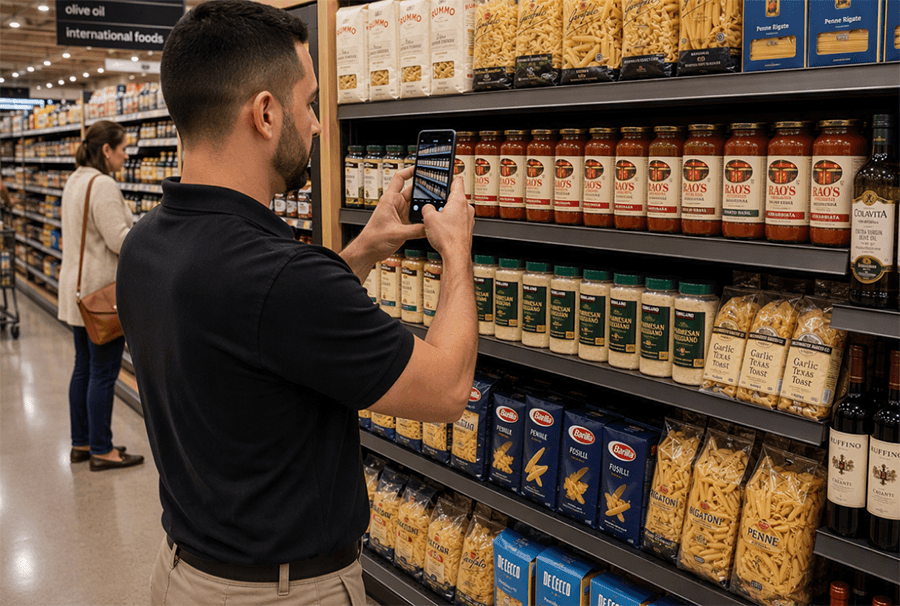
Protecting a high-value secondary spot means giving your field team tools built for the reality of the grocery floor—not just a digital version of the same paper checklist.
This is where shelf execution stops being a matter of luck and starts being a matter of process. Offline-capable mobile task management lets your merchandisers conduct audits, flag a missing display, and complete compliance surveys without waiting for a Wi-Fi signal that may never show up. The data captures the moment the rep sees it, and syncs the second a connection is available.
AI image recognition adds another layer to that process. Rather than relying on a rep’s judgment call about whether a display looks right, a quick photo is enough to confirm whether the product is actually stocked correctly, positioned as agreed, and matching the plan you signed off on. That turns a routine photo into fast and reliable shelf intelligence, without anyone needing to second-guess what they’re looking at.
The real advantage is timing. A rep doesn’t need to wait until they’re back at a desk to act on what they find:
- A missing display gets flagged and escalated the moment it’s spotted
- A misplaced product gets corrected before the rep leaves the aisle
- A compliance issue gets resolved in minutes, not days
Closing that window is what separates a cross-merchandising strategy that delivers on its promise from one that silently underperforms without anyone noticing until the sales data comes to light.
Closing the Loop with Real-Time Visibility and Shelf Intelligence
Fixing an issue on the shelf solves the problem in that store, on that day. But if your trade marketing team and category managers can’t see what’s happening across hundreds of locations at once, you’re still flying blind at the level where strategy decisions actually get made.
This is where the photo your rep captured stops being a one-off fix and becomes part of a larger picture. Every image rolls up into a centralized view your team can search and filter—by retailer, by region, by SKU, by campaign— turning individual store visits into a pattern you can actually act on.
That rollup changes the conversation across your organization:
- Trade marketing can confirm a paid display went up across an entire retailer’s footprint, not just the handful of stores someone happened to visit
- Category managers can spot that a specific pairing is consistently getting dismantled in one region, long before it shows up as a dip in sales data
- Leadership has a defensible, dated record to point to if a placement dispute ever comes up with a retail partner
Cross merchandising is a smart, low-cost way to encourage additional purchases and build a seamless shopping experience. But the strategy only earns its return if you can see, at scale, whether it’s actually happening.
Ready to protect the placements you’ve already paid for? Schedule a demo to see how FORM helps your team stop losing revenue to manual errors and poor shelf visibility.
Frequently asked questions
Who is responsible for maintaining cross-merchandising displays in a store?
Responsibility is typically split between the retailer’s store associates, who restock and maintain shelves day to day, and the brand’s field reps, who are tasked with verifying that paid placements and trade agreements are actually being honored. Because store associates often prioritize convenience over an agreement they weren’t part of, displays can get moved or dismantled without the brand finding out right away.
How can brands verify their cross-merchandising placements are still live?
The most reliable method is a combination of regular field visits and photo-based reporting, where a rep captures a timestamped image confirming a display’s location and condition. This gives brands and retailers a documented record to reference, rather than relying on memory or assuming a placement is intact between visits.
How does cross merchandising support visual merchandising strategies?
Cross merchandising is a form of visual merchandising that helps shoppers discover complementary products more easily. By grouping related items together, retailers can create more intuitive shopping experiences while encouraging additional purchases.
What role does customer behavior play in cross merchandising?
Successful cross-merchandising strategies are built around customer behavior. Retailers analyze how shoppers browse, what products they frequently buy together, and where complementary placements are most likely to influence purchasing decisions.
What determines the success of a cross-merchandising strategy?
Success depends on pairing relevant products, maintaining display compliance, and ensuring placements remain visible and stocked over time. Even the best strategy can underperform if displays are moved, dismantled, or left unmonitored.