

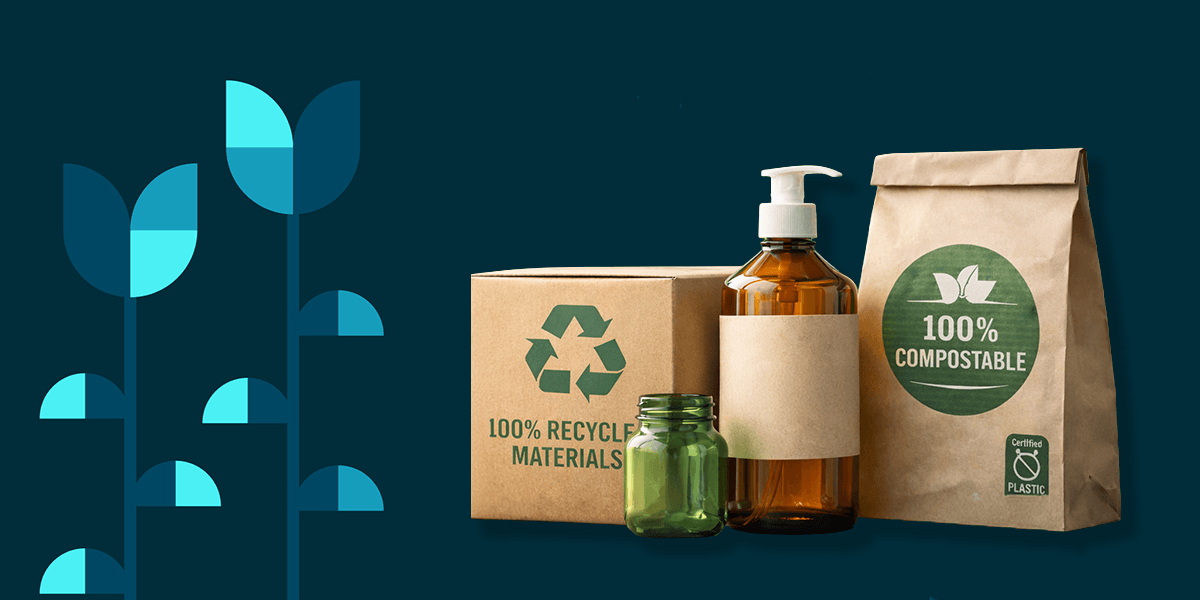
Packaging influences far more than product protection. It affects material extraction, energy use, transportation emissions, waste systems, and how brands are perceived. As regulatory requirements expand and consumers demand greater transparency, sustainable packaging has shifted from a niche initiative to a strategic priority.
Understanding sustainable packaging requires looking beyond surface-level claims. Eco-friendly labels can signal progress – but only when supported by measurable material choices, responsible sourcing, and compatibility with real recovery systems.
What Is Sustainable Packaging?
Sustainable packaging refers to materials and systems designed to minimize environmental impact throughout their lifecycle – from raw material extraction and production to transportation, use, and end-of-life processing.
Rather than focusing on a single attribute such as recyclability or compostability, sustainable packaging considers material efficiency, infrastructure alignment and keeping the materials in circulation. Its core objective is to keep materials in use longer while reducing reliance on virgin inputs and preventing unnecessary waste.
Key characteristics of sustainable packaging often include:
- High levels of post-consumer recycled (PCR) content
- Designs compatible with existing recycling infrastructure
- Reduced material intensity through lightweighting
Simplified, mono-material constructions - Safer chemical formulations in inks, coatings, and adhesives
- Clear labeling to support proper disposal
True sustainability is not determined by marketing language alone. It depends on whether materials can realistically be recovered and whether their production reduces overall environmental burden.
Why Is Sustainable Packaging Important?
Packaging decisions have ripple effects across climate systems, public health, resource extraction, and waste management infrastructure. Because packaging accounts for a significant portion of global plastic and paper consumption, improvements in this category can generate measurable environmental benefits.
Climate & Carbon Impact
Material production is energy-intensive. Plastics, paperboard, glass, and metals all require extraction, processing, and transportation before reaching consumers. Plastics alone contribute roughly 3-4% of global greenhouse gas emissions across their lifecycle.
Sustainable packaging reduces climate impact by:
- Increasing recycled content, which typically requires less energy than virgin production
- Reducing overall material use
- Designing lighter formats that lower transport emissions
- Supporting closed-loop recycling systems
- These improvements compound at scale, particularly for high-volume shippers.
Waste & Pollution Reduction
Improperly managed retail and grocery packaging can accumulate in landfills or leak into waterways. Designing packaging that aligns with real recovery systems reduces contamination and improves material recirculation.
Simplified designs – particularly mono-material builds – increase recycling yield and reduce sorting challenges. Recovery-ready formats reduce residual waste and lower disposal costs.
Regulatory & Compliance Drivers
Extended Producer Responsibility (EPR) policies and recycled-content mandates are reshaping packaging standards globally. Producers are increasingly responsible for the environmental footprint of their packaging.
Aligning packaging with regulatory frameworks can help:
- Reduce compliance fees
- Improve retailer acceptance
- Avoid restricted material categories
- Strengthen long-term market access
Sustainable packaging increasingly supports operational resilience, not just environmental positioning.
Benefits of Sustainable Packaging for Brands
Beyond environmental considerations, sustainable packaging delivers measurable operational and strategic advantages to businesses.
Stronger Brand Trust
Consumers increasingly evaluate environmental impact when making purchasing decisions. Transparent, verifiable sustainability claims help reduce skepticism and strengthen brand credibility.
Clear documentation of recycled content and recovery pathways supports:
- Higher purchase intent
- Improved customer loyalty
- Stronger ESG reporting
- Greater retailer confidence
Sustainability performance must align with communicated claims.
Lower Operational Costs
Material efficiency often reduces cost. Right-sizing cartons lowers material usage and shipping expenses, particularly under dimensional weight pricing structures.
Additional operational benefits include:
- Reduced filler consumption
- Lower damage-related returns
- Improved pallet density
- Simplified warehouse handling
Efficiency and sustainability frequently reinforce one another.
Improved Supply Chain Resilience
Using recycled materials can reduce exposure to volatile virgin material markets. Diversified sourcing and infrastructure-ready designs strengthen procurement flexibility and long-term stability.
Reduced Product Damage
Well-fitted packaging stabilizes products during transit. Reduced movement decreases breakage, reverse logistics, and customer dissatisfaction – protecting both margins and reputation.
Common Sustainable Packaging Materials
Selecting sustainable materials requires a balance of performance, lifecycle impact, and infrastructure compatibility. No material is universally ideal; suitability depends on product requirements and recovery systems.
Recycled Paper & Corrugated Cardboard
Recycled fiber substrates are widely used in shipping boxes, mailers, and inserts. Corrugated cardboard made with high PCR content significantly reduces environmental footprint compared to virgin fiber alternatives.
In addition to recycled content, structural design improves sustainability. Efficient board grades and optimized dimensions reduce material use while maintaining protective strength.
Important attributes include:
- Broad curbside recyclability
- Renewable fiber inputs
- Strong recovery infrastructure
- Compatibility with right-sizing strategies
Reduced lifecycle emissions when high PCR content is used
Recycled paper-based systems often provide one of the clearest circular pathways in e-commerce packaging.
Recycled Plastics (LDPE & HDPE Films)
Flexible recycled films are common in lightweight mailers and protective packaging. Their low weight reduces transportation emissions compared to heavier rigid materials.
From a sustainability perspective, film packaging performs best when:
- Constructed from mono-material plastic
- Containing high PCR resin levels
- Avoiding mixed laminates
- Clearly labeled for store drop-off recycling
Where appropriate recovery infrastructure exists, recycled plastic films can remain in circulation effectively.
Glassine & Specialty Paper Barriers
Glassine paper provides a smooth, moisture-resistant surface without plastic lamination. It is often used in apparel, food-adjacent products, and inner wraps.
Responsible sourcing is critical due to its refined pulp production. Certified forestry inputs help support sustainable land management.
Glassine can:
- Replace plastic-laminated papers
- Improve presentation without synthetic coatings
- Maintain recyclability within paper streams where accepted
Material selection should always consider recovery compatibility.
Bio-Based & Emerging Feedstocks
Innovative materials such as mycelium, seaweed-derived films, and algae-based inks are expanding packaging possibilities. These materials aim to reduce fossil fuel reliance and, in some cases, support carbon sequestration.
When evaluating bio-based materials, important considerations include:
- Renewable sourcing practices
- Composting infrastructure compatibility
- Performance durability during transit
- Scalability of supply
- Regulatory compliance
Emerging materials require careful vetting to ensure real-world feasibility.
Top Sustainable Packaging Trends
Sustainable packaging is evolving rapidly under regulatory, economic, and consumer pressure. Verification and infrastructure alignment are increasingly prioritized over broad sustainability claims.
Verification & Measurable Claims
Documentation and traceability are becoming standard expectations. Retailers and regulators increasingly require proof of recycled content and recyclability validation.
Verification-ready packaging systems often include:
- Third-party certifications
- Documented PCR percentages
- Transparent material composition disclosures
- Clear consumer disposal instructions
- Auditable supply chain records
Data-backed claims reduce greenwashing risk and improve compliance.
Extended Producer Responsibility (EPR)
EPR frameworks shift responsibility for packaging waste to producers.
Material design now directly influences financial obligations under these policies.
Recovery-ready packaging helps:
- Lower fee exposure
- Improve recycler acceptance
- Avoid restricted materials
- Strengthen compliance resilience
Design decisions increasingly affect cost structure.
Safer Chemistry & Material Simplification
Restrictions on PFAS and other substances of concern are reshaping packaging specifications. Simplified material builds improve both health outcomes and recycling compatibility.
Safer chemistry approaches typically involve:
- Reduced additive complexity
- Cleaner ink formulations
- Simplified coatings
- Improved recyclability
Material transparency supports both regulatory alignment and recycling quality.
Right-Sizing & Dimensional Efficiency
Oversized packaging increases emissions and cost. Dimensional optimization reduces empty space, lowers shipping weight, and improves material efficiency.
Right-sizing strategies aim to:
- Reduce void fill
- Lower transportation emissions
- Improve pallet utilization
- Decrease dimensional weight charges
- Minimize excess material use
This remains one of the most immediately actionable sustainability improvements.
Infrastructure-Ready Design
Packaging must align with real recovery systems to be effective. Theoretical recyclability does not guarantee material recovery.
Infrastructure-ready designs prioritize:
- Mono-material construction
- Easily removable labels and components
- Clear disposal instructions
- Avoidance of mixed laminates
- Alignment with regional collection systems
Recovery compatibility determines real sustainability performance.
Building Smarter Packaging Systems
Sustainable packaging is most effective when treated as an integrated system rather than a single material substitution. Environmental impact, operational efficiency, regulatory alignment, and supply chain resilience are interconnected factors.
Well-designed systems:
- Reduce overall material intensity
- Increase recycled content responsibly
- Simplify material composition
- Align with recovery infrastructure
- Provide transparent documentation
Incremental improvements – such as improving PCR content, eliminating redundant components, or optimizing carton dimensions – can generate measurable impact at scale.
As environmental expectations continue to rise, packaging that is data-supported, infrastructure-ready, and performance-tested strengthens long-term operational stability. Thoughtful design transforms sustainability from a claim into a measurable, repeatable system advantage.
Additional Resources:
- What is Sustainability?
- Why Sustainability Matters
- What Are Sustainable Packaging Solutions for Businesses?
- Reimagining Packaging for a Sustainable Future
- Sustainable Shopping and Packaging
- Post-consumer Recycled Plastic Content in Plastic Beverage Containers
- Plastics and Pollution
- A Guide to Plastic in the Ocean
- What is the Circular Economy?
- The Impact of Plastics
- Plastics Programs and Resources
- Expert Article: Packaging
- Innovations in Food and Beverage Packaging
- Finding Solutions to Plastic Pollution
- Reducing Food and Packaging Waste