

In the alcohol industry, the line between on-premise and off-premise shapes everything—from how products are distributed to how they’re displayed, priced, and sold. Most brands and distributors understand the distinction, but far fewer have figured out how to execute consistently across both channels at once.
That gap between strategy and in-market reality is where your beverage and alcohol (Bev-Alc) revenue quietly disappears. While each channel requires a different approach, real, sustained growth comes from maintaining executional excellence across both.
Key Takeaways
- Strong distribution doesn’t guarantee strong performance—execution at the venue or shelf level is what ultimately determines whether a product converts.
- Retail execution data reveals whether on-premise and off-premise standards are actually being met, exposing compliance gaps that would otherwise stay hidden.
- Inconsistent execution is one of the highest hidden costs in alcohol sales, driving uneven performance across channels, regions, and accounts.
- Better execution visibility means faster corrections, stronger compliance, and more consistent Bev-Alc growth across every channel.
What Are On-Premise vs Off-Premise Alcohol Sales?
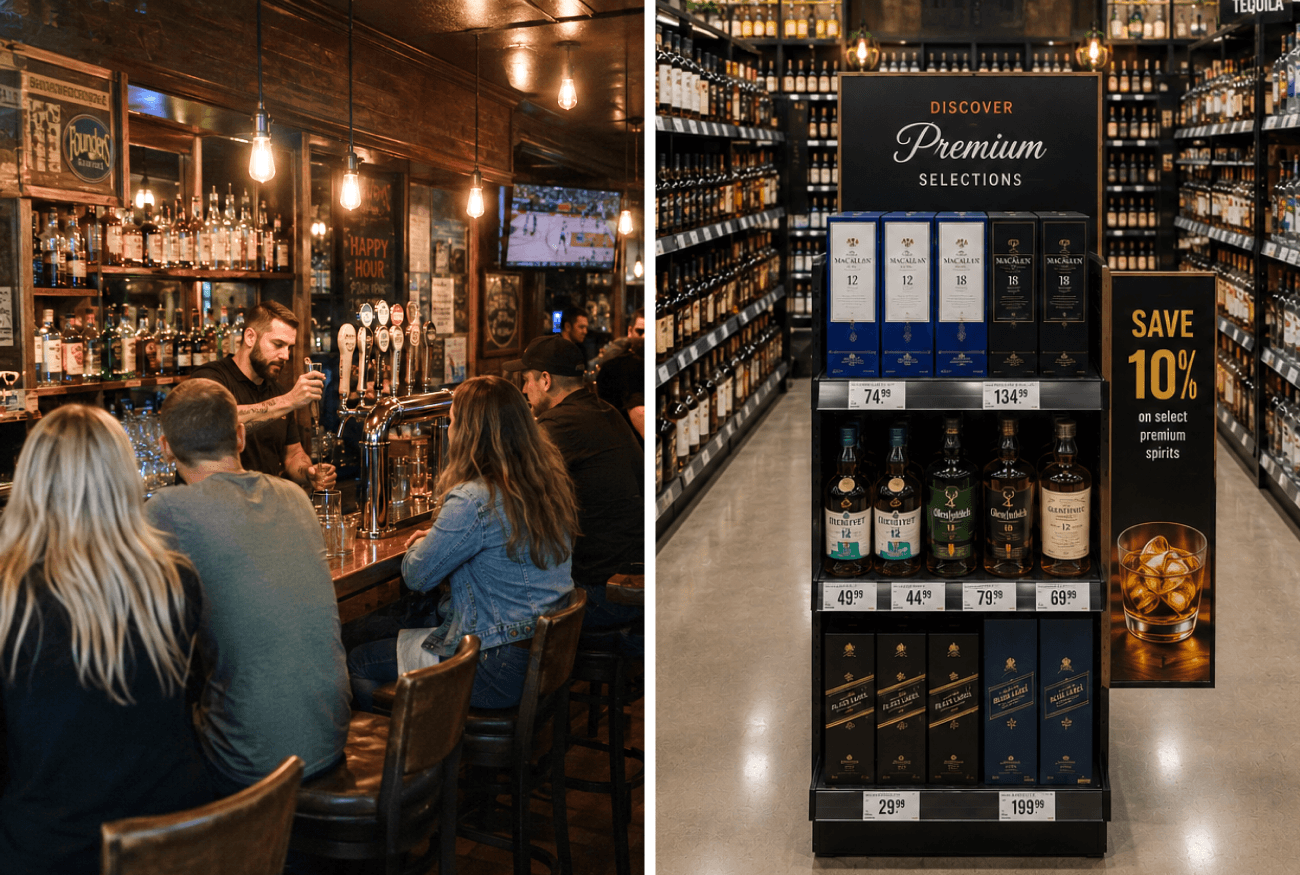
On-premise establishments are venues where alcoholic beverages are ordered and consumed on-site—think bars, restaurants, pubs, breweries, and event venues. Off-premise alcohol sales happen at locations like liquor stores, grocery stores, and convenience stores, where customers purchase a bottle of wine, beer, or spirits and consume it elsewhere.
The key differences go beyond where the drink is enjoyed. They shape purchase behavior, brand experience, and how alcohol moves through each channel:
- On-premise customers are often open to discovery, influenced by what’s on tap, featured in cocktails, or recommended by staff.
- Off-premise shoppers tend to be mission-driven, selecting a familiar brand or category from the shelf.
- Off-premise sales typically drive higher volume through grocery stores and liquor stores; on-premise drives margin and brand equity.
- Each channel operates under distinct liquor license rules and regulations, with specific requirements around responsible service, security, and compliance varying by location and business type.
Knowing which channel you’re operating in and what drives purchase decisions within it is the foundation of any effective Bev-Alc execution strategy. The channels are different by design, so the challenge is building an approach that performs consistently across both.
Why Alcohol Sales Channels Matter in Bev-Alc Distribution
On-premise and off-premise are more than just different places to sell alcohol. They represent fundamentally different commercial environments, each with its own purchase triggers and revenue drivers. If you’re managing both channels, that distinction has real operational weight.
On-Premise: Where Brand Experience Drives the Sale
In on-premise establishments, visibility is earned through relationships, staff advocacy, and physical placement. A spirits label at the back bar, a beer on tap, or a wine list placement can meaningfully shift what a customer orders—and a well-positioned product can become a bartender’s default recommendation almost overnight.
Off-Premise: Where the Shelf Decides
In grocery stores, liquor stores, and convenience stores, the product has to sell itself. Shelf position, facing count, promotional signage, and pricing all compete for attention at the moment a customer reaches for a bottle, with no staff recommendation to bridge the gap.
When you understand what drives purchase decisions in each environment, it becomes easier to identify where execution gaps are costing you the most.
The Execution Gap in Alcohol Sales Channels
Distribution gets a product into a channel, but execution determines what happens after that. And in Bev-Alc, the distance between those two things is where performance is won or lost.
The execution gap is the disconnect between what you planned and what actually exists in the venue or store. It’s a problem across every channel, but especially costly in Bev-Alc, where margins are tight, and purchase decisions happen in seconds.
When the gap goes unaddressed, the downstream impact is consistent and compounding:
- Lost visibility at the point of purchase means missed conversion opportunities that never appear as a discrete line item in sales data
- Inconsistent brand experience across accounts erodes the equity brands work hard to build through trade marketing and field activity
- Reduced promotional effectiveness as trade spend drives traffic to venues and stores where execution hasn’t kept pace with the campaign
- Weak feedback loops between field teams and HQ leave leaders making decisions on incomplete or outdated information
The gap rarely announces itself loudly. It shows up in underperforming promotions, unexplained sales dips, and compliance failures that surface too late to act on.
Execution Challenges Across Both Channels
Understanding the gap is one thing, but knowing where it opens is another. On-premise and off-premise environments each create their own distinct execution pressure points, and they require different standards to manage effectively.
On-Premise Execution Challenges
In bars, restaurants, and other on-premise establishments, brands have limited direct control over how their products are presented. The most common pressure points include:
- Menu and tap handle placement are subject to venue priorities that can shift without notice
- Back bar visibility that depends heavily on staff relationships and venue layout
- Compliance tracking that relies on rep memory or self-reported data rather than verified, real-time information
- Staff advocacy gaps where inconsistent product knowledge translates directly into lost sales
Off-Premise Execution Challenges
In liquor stores, grocery stores, and convenience stores, execution challenges center on the shelf. Across large retail networks, maintaining consistency at every location is difficult without structured workflows and real-time data. The most common failure points include:
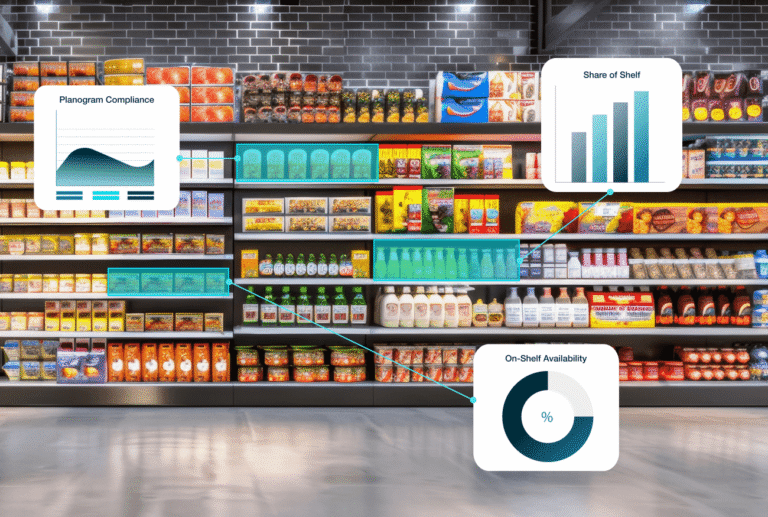
- Planogram non-compliance that displaces priority SKUs and weakens the share of shelf
- Promotional display gaps where POS materials are missing, incorrect, or never set up
- Pricing inaccuracies that undermine promotional strategy at the point of purchase
- Out-of-stocks that go undetected until the sales impact has already landed
For off-premise teams, strong visual merchandising at the shelf level is one of the most direct levers for strengthening product visibility and driving conversion.
How to Close the Alcohol Sales Execution Gap with Technology
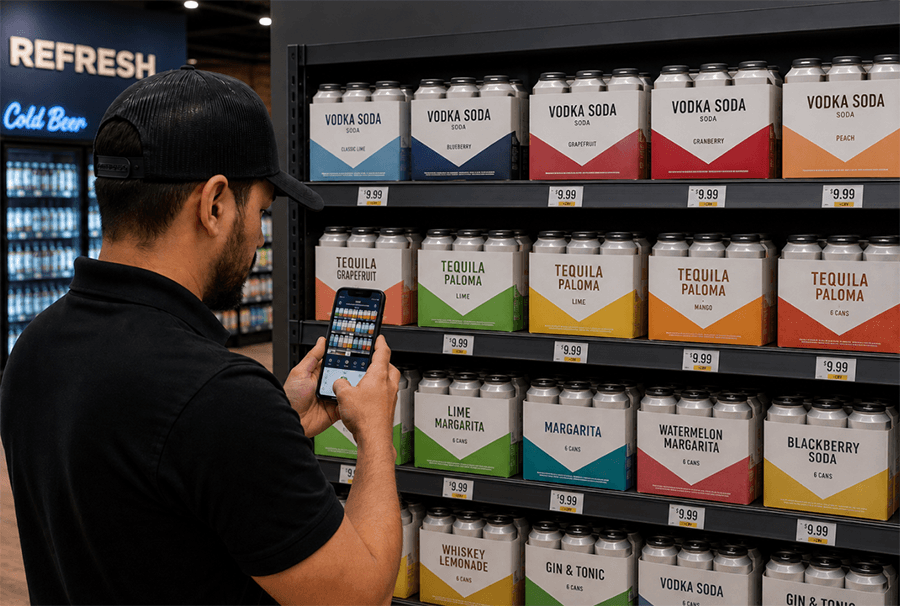
Closing the execution gap across on-premise and off-premise channels isn’t a matter of hiring more reps or running more audits. It’s a matter of giving the teams you already have better tools, better data, and a clearer picture of what’s actually happening in the field.
For Bev-Alc brands and distributors, that means moving away from manual processes and disconnected reporting, and toward a connected execution system that works across both channels. The right technology stack makes this possible across four key areas:
- Standardized field execution workflows that give reps a consistent process across every account type, reducing variation in how on-premise and off-premise visits are conducted and recorded
- Mobile field reporting and photo-based compliance tracking that replaces self-reported data with verified, visual proof of what’s actually in place at every venue and store
- Real-time dashboards that give you a live view of execution performance across both channels—surfacing compliance gaps, promotional issues, and visibility problems while there’s still time to act
- Aligned merchandising and promotional execution across off-premise accounts, ensuring that planograms, pricing, and POS materials are consistent at every location in the network
When you can see the gap between what was planned and what’s actually happening in the field, closing it becomes much easier.
See how FORM helps Bev-Alc brands and distributors improve execution visibility across both channels, close the gap between distribution strategy and in-market execution, and drive more consistent performance across every account they serve.
Frequently Asked Questions
How does better execution visibility improve alcohol sales performance?
When you can see what is actually happening in-store or on-premise, you can quickly correct issues like poor shelf placement or missing promotions. This improves compliance with merchandising standards, strengthens brand visibility, and directly increases conversion at the point of sale.
What role does data play in aligning on-premise and off-premise performance?
Execution data creates a unified view of performance across both channels, allowing teams to compare compliance, identify underperforming locations, and optimise field activity. This helps distributors prioritise effort where it has the most impact and ensures consistent brand execution across all alcohol sales environments.
How do distributors prioritise execution effort across a large mixed-channel account base?
The most effective approach is to let data lead. By tracking compliance rates, promotional execution, and visibility standards across all accounts, distributors can identify which locations are underperforming and deploy field resources where the commercial impact is highest—rather than spreading effort evenly across every store and on-premise establishment regardless of return.