


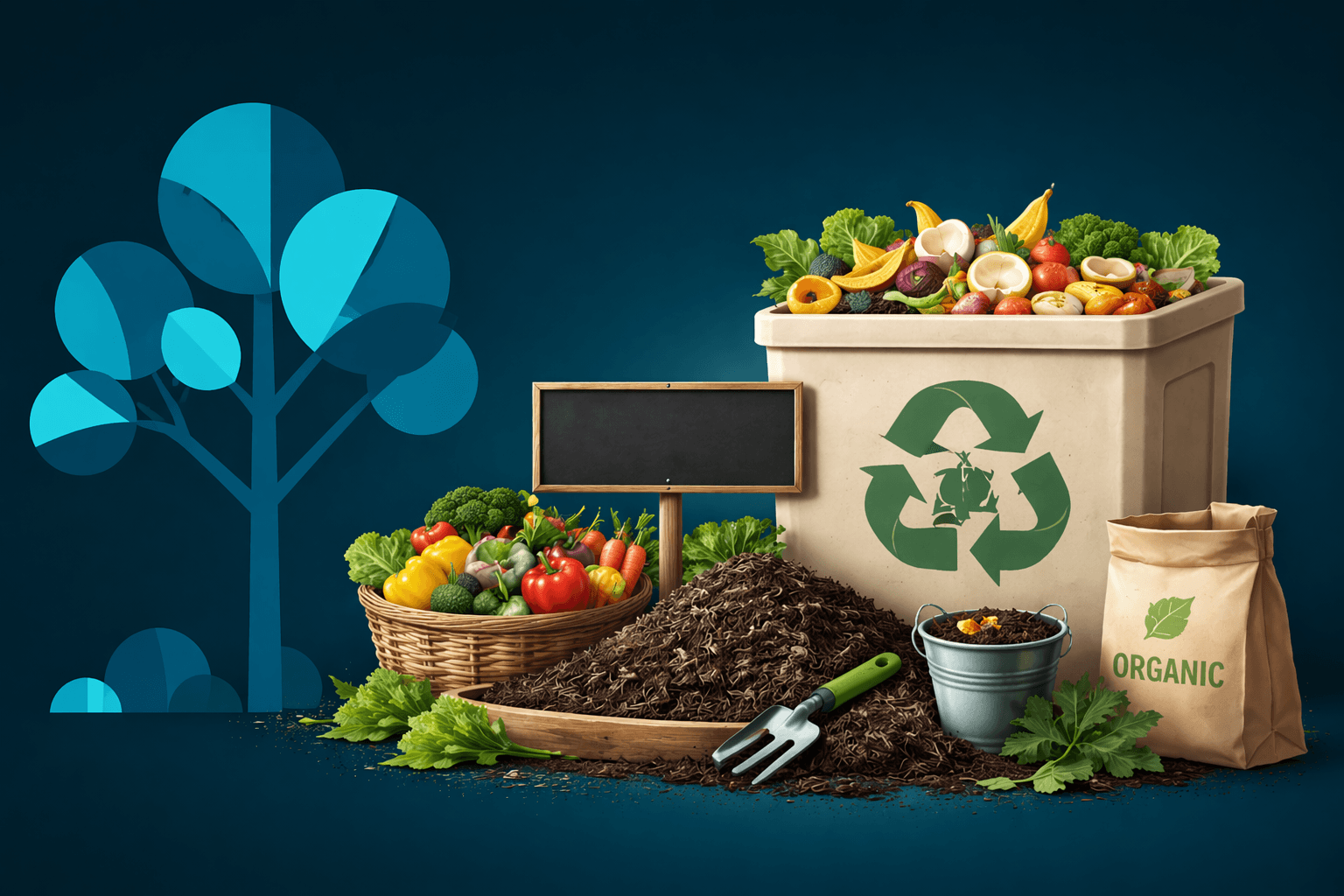
Many people don’t realize how much food is thrown away each day. Food waste happens for many reasons – buying more than we can eat, forgetting leftovers in the refrigerator, or misunderstanding expiration dates. What often goes unnoticed is that food isn’t just something we consume. It requires land, water, energy, transportation, and human effort to grow, harvest, stock grocery stores and prepare meals.
Teaching students about food waste helps build awareness early. When young people understand the value of food and the environmental impact of throwing it away, they can begin making smarter choices. Small actions – like finishing meals, sharing extra food, or composting scraps – can grow into lifelong habits that reduce waste at home, at school, and in the community.
What is Composting and Why is it Important?
Composting is the process of setting aside organic materials, such as food scraps and yard waste, and allowing them to decompose into a nutrient-rich soil called compost. Microorganisms break down these materials over time, turning what would have been trash into something useful for gardens and plants.
Composting is important because it reduces the amount of waste sent to landfills. When food scraps sit in landfills without oxygen, they produce methane, a greenhouse gas that contributes to climate change. Composting instead allows organic materials to break down naturally while improving soil health, conserving water, and reducing the need for chemical fertilizers. It transforms waste into a resource and supports a healthier environment.
The Benefits of Composting
Composting offers more than just waste reduction. For students, it provides a real-world way to understand environmental science and sustainability. When food scraps break down into soil they mimic how natural systems recycle nutrients. Composting also encourages responsibility and teamwork when done at home or in school programs.
There are several key benefits to composting:
Learn About the Environment
Composting helps students understand how ecosystems work. They see how organic materials return nutrients to the soil and support plant growth. It reinforces the importance of reducing waste and protecting natural resources.
Build Sustainable Habits
Practicing composting encourages long-term thinking. Students begin to recognize that daily actions affect the environment. Sorting scraps and reducing waste becomes part of a sustainable routine. The same mindset can apply to consumer goods, encouraging students to think critically about waste beyond just food.
Reduce Food Waste
Many food scraps can be composted instead of thrown away. Fruit and vegetable peels, eggshells, coffee grounds, and yard trimmings can all be diverted from the trash. Composting lowers the total amount of waste sent to landfills.
Improve Soil Health
Compost adds nutrients to soil and improves its structure. Healthy soil retains moisture better, supports plant growth, and reduces erosion. This is especially helpful for gardens at home or at school.
Hands-On Learning
Composting is an interactive science lesson. Students observe decomposition, insects, microorganisms, and temperature changes. It connects classroom lessons to real-life environmental processes.
Encourage Responsibility
Maintaining a compost system requires regular care. Turning the pile, checking moisture levels, and adding materials teaches accountability and teamwork.
Conserve Water
Soil enriched with compost holds water more effectively. This reduces the need for frequent watering and helps conserve resources.
Strengthen Environmental Awareness
Composting gives students a direct role in protecting the planet. It builds confidence that simple actions can make a meaningful difference. Increased awareness may also inspire them to question the role of retail companies and restaurants in generating food waste.
Teaching Students to Compost
Starting a compost system may seem complicated at first, but it becomes manageable when broken into simple steps. Composting can begin at home and later be expanded into classrooms or school gardens. The key is understanding what materials belong in compost and creating a routine for maintaining it.
1. Choose a Compost Location
Selecting the right location is important for success. At home, this might be a shaded corner of a yard with good drainage. At school, compost bins can be placed near gardens, behind cafeteria areas, or in designated outdoor learning spaces.
A good compost location should:
- Be well-drained
- Have partial shade
- Be easy to access for regular maintenance
- Be far enough from main walkways to avoid disruption
Indoor composting systems, such as small bins or worm composters, can also be used in classrooms when outdoor space is limited.
2. Build the Compost Pile
A successful compost pile needs a balance of materials. Compost works best when “green” materials (rich in nitrogen) are combined with “brown” materials (rich in carbon).
To build a compost pile:
- Start with coarse materials like small twigs to allow airflow.
- Add a layer of green materials such as fruit and vegetable scraps.
- Add a layer of brown materials like dry leaves or shredded paper.
- Lightly moisten each layer.
- Continue alternating layers to maintain balance.
Turning the pile weekly helps oxygen circulate and speeds up decomposition. Air and moisture are essential for healthy compost.
3. Set Up a Scrap Collection System
Consistency makes composting easier. Setting up a simple collection system encourages regular participation.
Students can:
- Use a small bin to collect daily food scraps
- Clearly label compostable materials
- Empty the collection bin into the main compost pile each day
Common compostable items include:
- Fruit and vegetable scraps
- Coffee grounds
- Eggshells
- Yard trimmings
- Shredded paper
Avoid meat, dairy, and oily foods unless using a specialized compost system.
4. Schedule Weekly Maintenance
Compost requires regular care to break down properly. Creating a schedule ensures the process continues smoothly.
Students can:
- Turn the compost pile weekly
- Check moisture levels
- Observe changes in texture and temperature
- Record observations as part of science lessons
Monitoring compost connects directly to environmental science topics and reinforces observation skills.
5. Use the Finished Compost
After several weeks or months, compost becomes dark, crumbly, and earthy-smelling. This finished compost can be used in gardens, landscaping, or potted plants.
Home composting systems can easily be replicated at school. Cafeterias can collect food scraps, and student-led compost teams can manage the bins. The finished compost can support school gardens or landscaping projects, turning waste into something productive.
Reducing Food Waste at School
Schools can take practical steps to reduce food waste and support composting programs. Even small improvements can create meaningful change.
Schools can:
- Conduct food waste audits to understand how much is being thrown away
- Create share tables for unopened or unwanted food items
- Educate students about portion control
- Partner with local organizations to donate excess food
- Compost cafeteria scraps
When students participate in these efforts, they become part of the solution and help build a culture of sustainability within their school.
Composting Lesson Ideas and Student Resources
- What is Climate Change?
- Impact of Food Waste on Society
- Composting at Home
- Residential Compost Tips
- Benefits of Composting
- 6 Reasons Why We Waste So Much Food (and How We Can Stop)
- Food Loss and Waste Reduction
- Food Waste 101
- Use Food Well: Become an Expert at Reducing Food Waste
- Composting for Kids
- Composting Experiments, Tips, and Resources for the Classroom
- Lesson Plans for Learning Teaching Composting
- Fall Composting Is a Sustainable Habit
- Composting With Worms Lesson Plan for Preschoolers
- School Composting: An Introduction and K-5’s Teacher’s Guide