

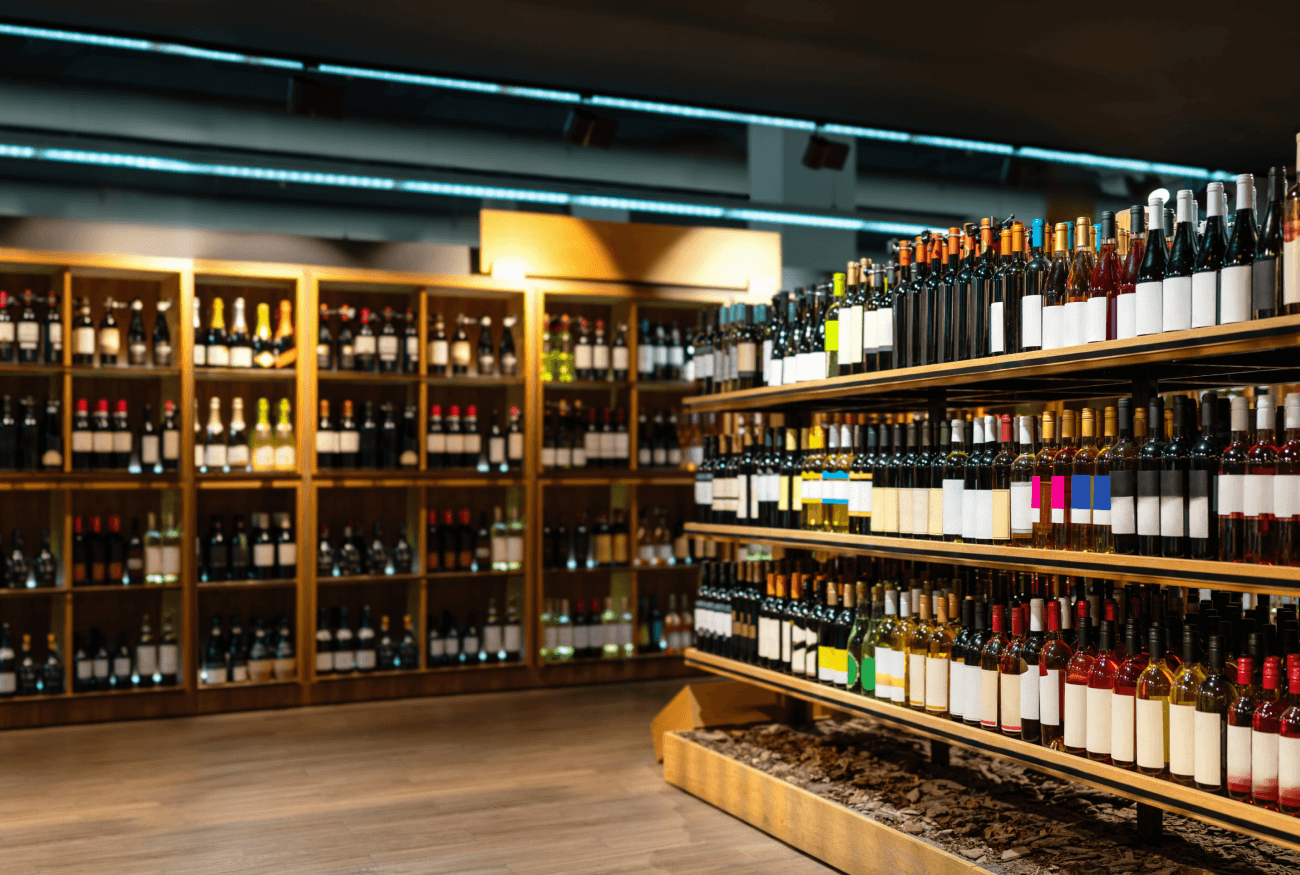
Liquor store merchandising is how you strategically plan product placement, displays, and store layout to influence what customers find, engage with, and buy. Done right, it’s one of the most powerful (and most underutilised) levers in your retail operation.
The difference between a store that consistently drives sales and one that doesn’t often comes down to execution: where products live, how categories are organised, and whether your in-store experience reflects deliberate commercial thinking or default habit.
Key Takeaways
- Liquor store merchandising is a direct driver of Bev-Alc sales performance—how you position and display products strongly influences what customers notice and buy.
- Product visibility and placement are critical to customer behavior. Eye-level positioning, endcaps, and cold storage placement all play a major role in impulse purchases and product discovery.
- Seasonal and promotional execution keeps your store commercially relevant. Rotating displays around holidays and supplier campaigns maintains consumer interest and maximises short-term sales performance.
- Consistency is a key growth lever. Even strong strategies underperform when they aren’t executed reliably—across a single store over time, or across multiple retail outlets.
What Is Liquor Store Merchandising?
Liquor store merchandising is the strategic approach to how alcoholic beverages are presented in your store, covering shelf placement, category organisation, signage, display formats, and cold storage positioning to guide customer behavior and improve sales outcomes.
It’s worth drawing a clear line between merchandising and general store organisation. Organisation is functional. Merchandising is commercial, connecting customer preferences, purchasing patterns, and product placement to influence decisions at the moment they’re being made.
Several factors make merchandising in the alcohol industry uniquely complex:
- Category depth: A well-stocked liquor store may carry hundreds of SKUs across spirits, wine, craft beer, and RTDs—all competing for limited shelf space
- Regulatory constraints: Local regulations shape how certain products can be displayed or promoted
- Seasonal opportunity: Predictable seasonal trends create high-value windows that reward retailers who plan ahead
- Customer data: Understanding purchasing patterns and customer preferences is what separates reactive stocking from a deliberate merchandising strategy
The stores that consistently outperform treat liquor store merchandising as exactly that—a strategy, not a default.
Why Merchandising Matters in Bev-Alc Retail
Customers walking into a liquor store are rarely undecided about everything—but they’re almost always open to influence. The right product in the right place, at the right moment, is what converts curious and casual browsing into buying. That’s the commercial case for taking liquor store merchandising seriously.
A few reasons it carries more weight in Bev-Alc retail than in most other categories:
- Competition for attention is intense: Hundreds of SKUs compete for limited shelf space, and products that aren’t visible simply don’t sell—regardless of quality or brand loyalty
- Premium perception is placement-dependent: Where a bottle sits signals its value. Eye-level positioning and premium displays elevate product visibility and justify higher price points in the shopper’s mind
- Impulse purchases are significant revenue drivers: Strategic placement of complementary products, seasonal items, and new releases near high-traffic zones capitalises on unplanned buying decisions
- The in-store experience shapes loyalty: A well-merchandised store is easier to navigate, more enjoyable to shop, and more likely to earn repeat business — the foundation of any customer loyalty strategy
Your store layout isn’t a neutral backdrop. Every placement decision either works for your sales performance or against it.
Core Liquor Store Merchandising Strategies
Strong liquor store merchandising starts with the fundamentals—the placement decisions and display principles that directly determine what customers see, reach for, and buy. Getting these right is the baseline for everything else.
Shelf Placement and Visual Hierarchy
Your shelf is your most valuable selling surface. How you use it determines which products move and which sit. A few principles worth building around:
- Eye-level is prime real estate: Position your highest-margin or highest-priority SKUs at eye-level, where customer behavior naturally directs attention first
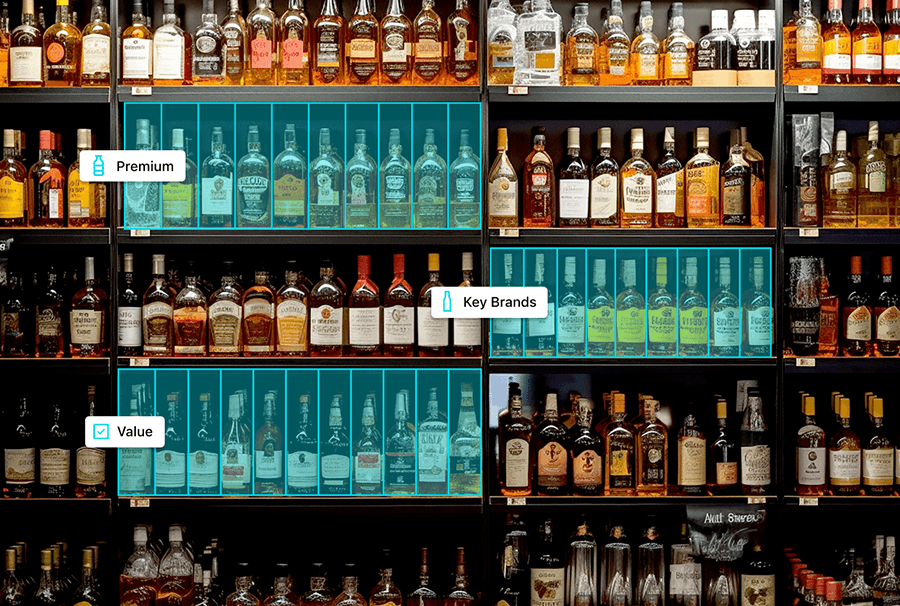
- Top shelves suit premium products: Customers who look up are often seeking something specific—use this space for premium spirits and specialty bottles that reward the effort
- Bottom shelves carry value items: Bulk formats, value-tier products, and high-volume everyday SKUs can live lower without losing their audience
- Group by category, not brand: Organising by spirits type, region, or style rather than alcohol brand makes navigation intuitive and improves the overall customer experience
- Face products forward consistently: Gaps and turned bottles break visual flow and signal poor inventory management, and both undermine shopper confidence
Cold storage follows similar logic. Position your highest-velocity craft beer and ready-to-drink products at eye-level in the cooler, and use door placement strategically to promote new arrivals or seasonal items. Combined with secondary displays such as endcaps, floor stacks, and feature placements, strategic cooler merchandising can significantly expand product visibility throughout the store.
Seasonal and Promotional Merchandising
Seasonal trends are some of the most reliable revenue opportunities in Bev-Alc retail—but only if your execution keeps pace with them. Holidays, sporting events, and supplier campaigns all create natural windows to rotate displays, introduce new point of sale materials, and move product that benefits from a timely context.
Effective seasonal execution looks like this:
- Plan promotional windows in advance: Build your display calendar around key dates like holidays, local events, sports seasons, so your store is ready before the moment arrives, not after
- Tie displays to occasions, not just products: A summer BBQ endcap featuring spirits, mixers, and complementary products outperforms a standalone bottle display every time
- Use supplier-supported activations: Branded signage, point of sale materials, and supplier-funded campaigns are underutilised by many liquor stores—coordinate with your retail partners and distributors to make the most of what’s available
- Rotate regularly to maintain interest: Static displays go stale quickly. Regular updates signal to returning customers that there’s always something new to discover, which supports repeat business and ongoing engagement
In-Store Displays That Improve Product Visibility
Shelf placement gets customers to the right aisle, but displays do the heavier lifting. They interrupt the expected, create focal points, and drive impulse purchases from customers who weren’t necessarily looking for a specific product.
The most effective display formats for liquor store merchandising include:
- Endcaps: High-visibility positions at the end of aisles that perform best when tied to a clear theme—a seasonal occasion, a promotional campaign, or a curated pairing. Resist the urge to overcrowd them
- Counter and checkout displays: The area near your point of sale is prime territory for small-format impulse items like miniatures, mixers, and accessories that are easy to add to a purchase already in progress
- Freestanding floor displays: Useful for premium bottle presentations, limited-edition releases, or new alcohol brand launches that deserve more space and visibility than the standard shelf allows
- Window and entrance displays: Your first opportunity to set expectations and draw customers in — seasonal themes and new arrivals work particularly well here
- Signage and point of sale materials: Shelf talkers, pricing callouts, and category headers reduce friction and help customers navigate confidently, especially in stores with deep or complex product assortments
The goal with any display is to create a clear focal point without visual clutter. Too many competing elements dilute the impact of each one. Choose a theme, commit to it, and keep the execution clean.
Building a Stronger Liquor Sales Strategy
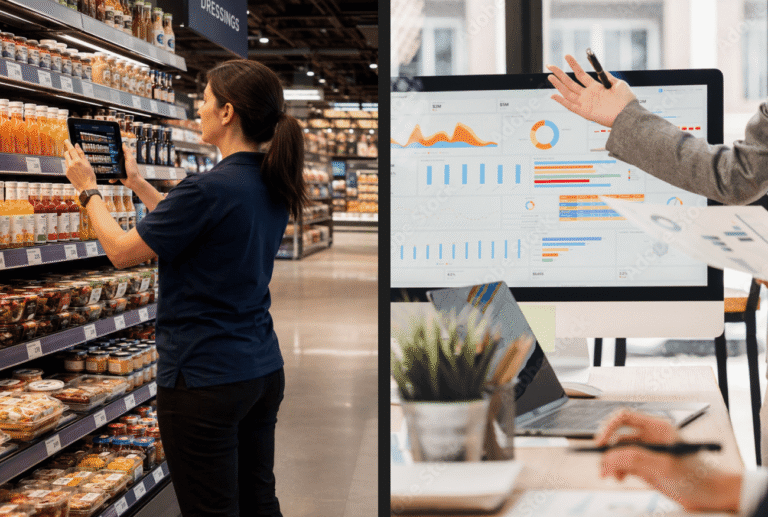
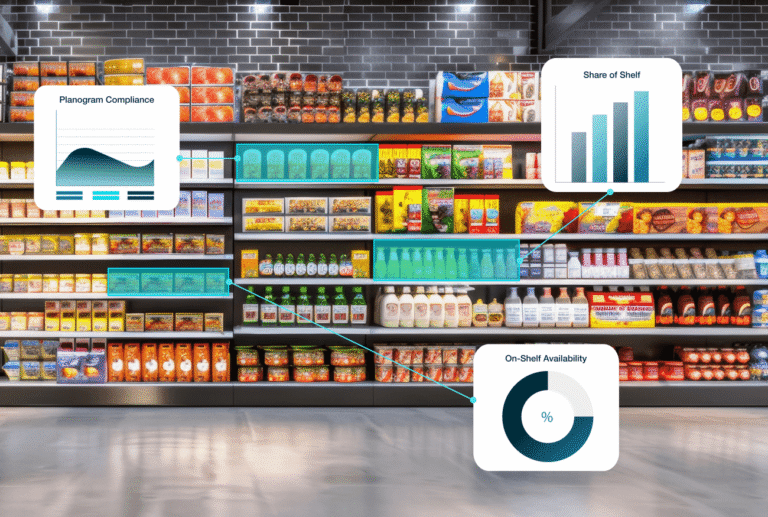
Strong merchandising strategies are only valuable when they’re executed consistently. Displays need to be maintained, promotions launched on time, and product placement standards upheld across every location. Without visibility into what’s happening in-store, even well-designed merchandising plans can fall short, leaving wasted revenue opportunities sitting on your shelves.
See how FORM helps Bev-Alc brands and retail teams improve merchandising execution, compliance visibility, and in-store performance across every location.
Frequently Asked Questions
How often should liquor store merchandising displays be updated?
Most liquor stores refresh featured displays every two to four weeks, aligned with seasonal trends, supplier promotions, product launches, and local events. Regular rotation maintains consumer interest and gives returning shoppers a reason to keep exploring—a simple but effective driver of repeat business.
What products perform best in endcap liquor displays?
Endcaps deliver the strongest results when used for seasonal products, limited-time offers, premium releases, or cross-merchandised bundles built around a clear occasion. Product visibility is maximised when the display has a cohesive theme rather than a mix of unrelated SKUs competing for attention.
How does execution consistency affect multi-location BevAl retail?
Inconsistent execution is one of the most common and costly gaps in BevAl retail. When product placement, display standards, and promotional compliance vary between locations, sales performance varies with them—and the gap is often invisible until it shows up in sales data. Building standardised workflows and using field execution tools to verify compliance are the most reliable ways to drive sales consistently across your network.
What role does digital marketing play in a liquor sales strategy?
Digital marketing—particularly email marketing, social media, and loyalty programs—extends the impact of your in-store execution by keeping your customer base engaged between visits. Upcoming events, new arrivals, exclusive benefits for loyalty program members, and special pricing campaigns all give customers a reason to return. The strongest liquor sales strategy treats in-store and digital as complementary, not separate.