

Key Takeaways
- Image recognition turns subjective store photos into objective data that brands and retailers can trust as a single source of truth.
- AI-powered audits eliminate manual counting, allowing field teams to analyze thousands of shelves in seconds rather than hours or days.
The technology extends beyond standard shelving to track complex execution points like displays, coolers, menus, and competitive pricing. - Instant identification of voids and compliance gaps enables brands to recover lost revenue and optimize trade spend in real time.
Every CPG brand knows exactly what they shipped to a retailer and what sold at the register. But what happened in between (on the shelf, where the actual buying decision was made) is often a mystery.
Did the product make it from the backroom to the floor? Was the promotional display built on time? Was a competitor blocking the view? Historically, answering these questions meant sending field reps to manually count facings and check boxes on a clipboard. It was slow, subjective, and impossible to scale.
Enter Image Recognition (IR). This technology has transformed the smartphone in a rep’s pocket into an automated auditor, closing the visibility gap between the warehouse and the checkout line.
This guide explores what image recognition is, how it is transforming industries from CPG to Convenience, and why manual audits are quickly becoming a thing of the past.
What is Image Recognition?
At a high level, image recognition is a subset of artificial intelligence (AI) and computer vision. It is the ability of software to identify objects, places, logos, people, or text within a digital image.
Think of it as “teaching” a computer to see like a human, but with infinite attention to detail and speed. The AI analyzes the pixels in a photo, compares them against a massive library of known images, and identifies matches with high probability.
What is Retail Image Recognition?
In a retail context, image recognition is specialized to identify consumer goods and store conditions. It doesn’t just see “a bottle”; it sees a 750ml bottle of Tito’s Handmade Vodka located on the third shelf, correctly positioned at eye-level, and priced accordingly.
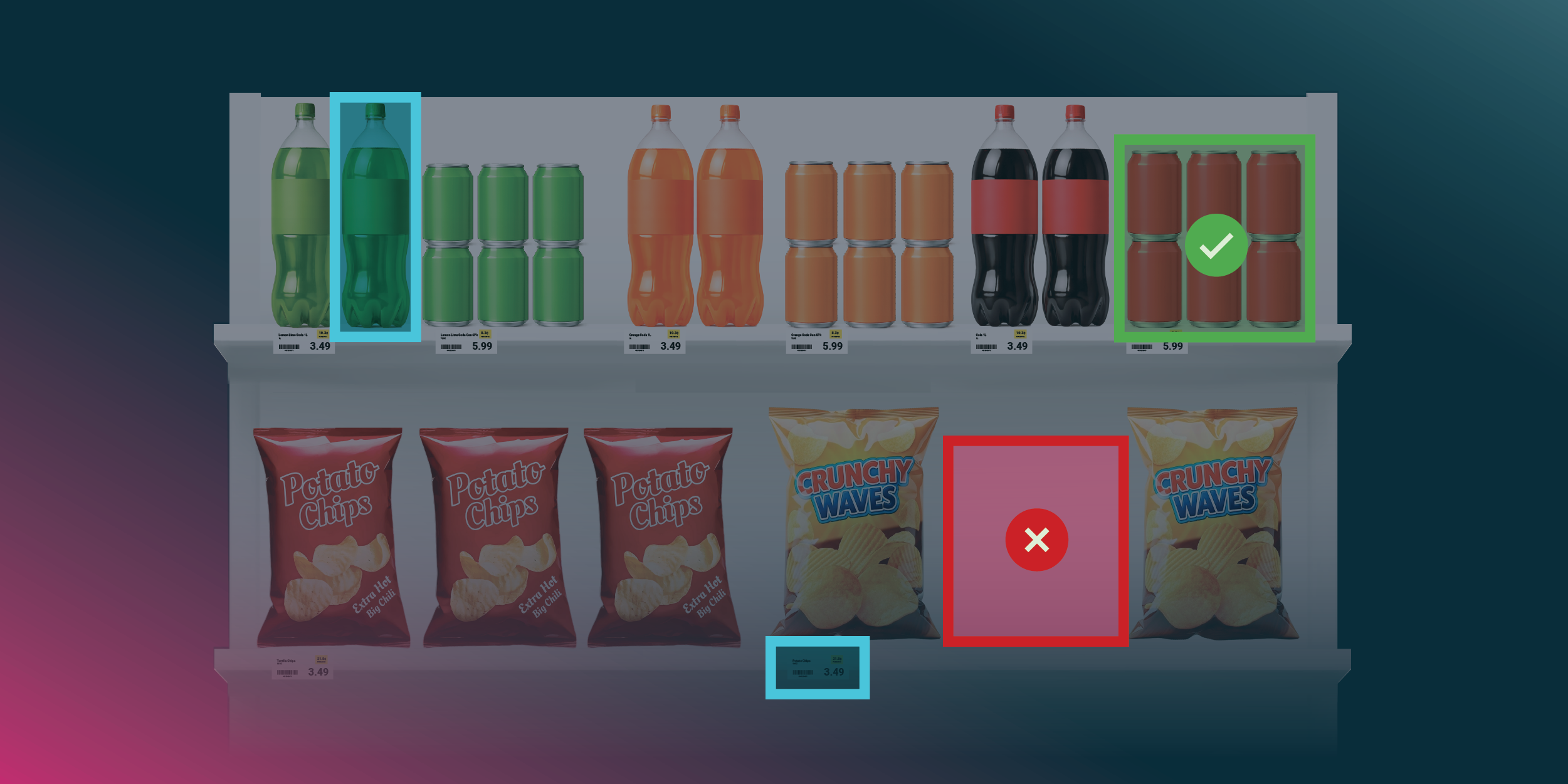
Retail IR is trained to recognize specific Stock Keeping Units (SKUs), price tags, promotional signage, and even competitor products. It converts a chaotic photo of a grocery aisle into a structured dataset—listing exactly which products are present, which are missing, and whether they are priced correctly—all in a matter of seconds.
Where is IR technology typically used?
While the underlying technology is the same, the application of image recognition varies significantly across different retail environments.
CPG Markets
For Consumer Packaged Goods (CPG) manufacturers, IR is primarily about Share of Shelf and Compliance.
Brands like PepsiCo or Frito-Lay use it to verify that their trade agreements are being honored at the store level – confirming that the product mix and shelf positioning negotiated with retailers are actually executed in stores.
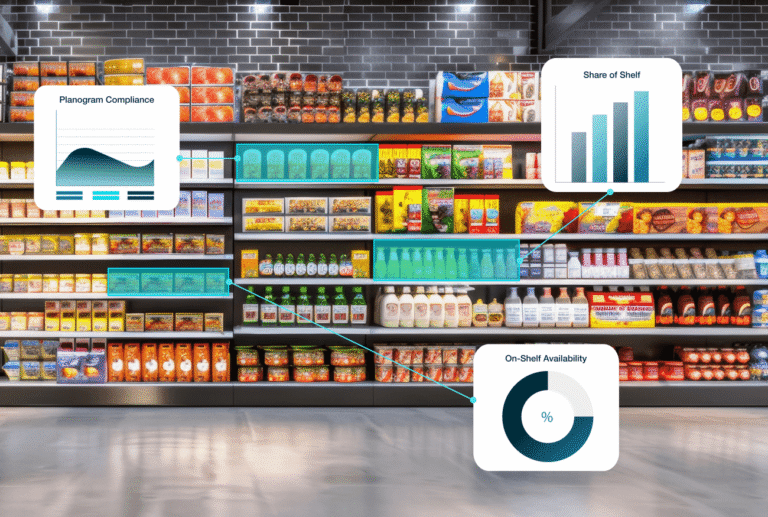
It allows reps to snap a photo of a chip aisle and instantly calculate their Share of Facings versus competitors, while checking assortment compliance to confirm every contracted SKU is present, correctly positioned, and priced as agreed.
Beer, Wine & Spirits
In the alcohol industry, placement is heavily regulated and highly competitive. Distributors use IR to track Menu Placements (identifying brands on a drink list) and Tap Handle dominance in bars. In retail stores, they use it to verify that expensive floor displays are built to plan and that cold box placements are optimized.
Grocery Operations
Grocery retailers themselves use IR for shelf intelligence and price integrity. Instead of scanning every tag, an associate can capture a section of the aisle to identify missing price tags or products that are in the wrong location (plugging) – giving store teams real-time visibility into shelf conditions and the ability to correct issues before they impact the customer experience.
See how GoSpotCheck by FORM has enabled grocers to keep perishables fresher, for longer.
Convenience Stores
In the fast-paced C-store environment, space is tight. IR is used here to monitor the “golden zone” (eye-level placement) for high-velocity items like energy drinks and snacks, ensuring that planograms are strictly followed in franchised locations.
*Note: While GoSpotCheck’s image recognition can also be applied in hospitality environments—such as restaurants, bars, and event venues—for menu and tap analysis, this guide focuses specifically on retail store applications.
Common Use Cases of Image Recognition in Retail
Retail image recognition isn’t just about taking pictures; it’s about solving specific execution problems that cost brands money. Here are three common ways the technology is deployed.
1. Monitoring Product Placement and Compliance
In the retail industry, product placement is a science. CPG brands focus heavily on developing “perfect store” strategies, but execution often falls short.
Why it matters: With over 50% of all grocery store items bought on impulse, it’s essential for CPG brands to have their products in the right location. Most buyers are easily influenced by convenience (eye-level and grab-level).
However, even the best strategy fails if it isn’t executed to plan. Retailers and brands sign strict trade agreements defining exactly how shelves should look, but ensuring these agreements are followed is a massive challenge.
Image recognition automates this verification process. By cross-referencing the “realogram” (the actual photo of the shelf) with the intended planogram, teams can identify unauthorized changes and enforce compliance agreements.
This allows field teams to instantly spot:
- Misalignments in shelf height.
- Missing facings for new product launches.
- Competitor encroachment on negotiated space.
2. Identifying Out-of-Stocks and Voids
The most expensive product in retail is the one that isn’t on the shelf. You can have the best marketing, the best packaging, and the best price, but if the shelf is empty when the customer reaches for it, that investment is wasted.
An out-of-stock isn’t just a missed sale today; it’s a risk of losing that customer permanently. According to the 18th Annual Global Shopper Study by Zebra Technologies, 52% of shoppers say they’ve left a store within the last three months without all the items they came in to buy.
Legacy audits struggle to close this gap because the human eye is naturally bad at spotting “absence.” A rep might scan a wall of 500 products and miss the three specific SKUs that are missing.
Image recognition acts as a safety net, instantly flagging voids against the master product list. This turns a passive audit into an active recovery mission, allowing the rep to pull backstock or alert the retailer before the shopper walks out the door.
3. “Beyond the Shelf”
Product placement doesn’t stop at the aisle. Image recognition also tracks secondary placements that are critical for brand visibility but often overlooked.
- Displays: Verifying that endcaps, seasonal displays, and point of sale (POS) stands are set up correctly.
- Coolers & Cold Boxes: Analyzing shelf share in the high-value beverage coolers.
- Menus: In hospitality, IR can digitize drink menus to track on-premise market share.
- Meat & Produce Cases: Ensuring planogram compliance and product availability to drive basket sizes and reduce spoilage.
Why Manual Audits Are No Longer Enough
For years, brands relied on manual inputs—reps typing numbers into a tablet or writing on paper. But as retail becomes more complex, manual methods are failing.
- The Speed Problem: Monitoring product placement manually is slow. A full category audit might take a rep 30-45 minutes. With image recognition, that same audit takes 2 minutes. This frees up the rep to spend the rest of their visit selling, building relationships, or fixing the issues they found. (Note: Link out to Outside Sales Management)
- The Accuracy Problem: Manual data is subjective. What one rep considers “compliant,” another might flag as an issue. There is also the risk of “pencil-whipping,” where reps rush through data entry to finish their day. Image recognition provides a literal visual record of the shelf. There is no guessing; the photo is the source of truth.
- The “Ghost Economy” Problem: Because of supply chain volatility, grocery shoppers have seen fluctuating out-of-stock rates. Grocery shoppers saw an out-of-stock rate of 31% in April 2022 (a peak that highlighted the fragility of manual inventory tracking). Relying on humans to catch every gap in this environment is impossible; you need AI to see what the human eye misses.
Drive Execution with GoSpotCheck's Image Recognition
To successfully execute and evaluate in-store strategies, leaders need a platform that doesn’t just capture data – but drives action.
GoSpotCheck by FORM is the leading mobile app for field execution, fully integrated with enterprise-grade image recognition.
- Guided capture: Reps simply snap photos using our intuitive grid interface.
- Instant insights: Our AI detects SKUs, pricing, and compliance gaps in minutes.
- Closed-loop action: When an issue is found (like a missing price tag), teams can create and assign follow-up tasks for execution.
The industry is moving fast: Retailers are betting big on AI to close the execution gap. According to Zebra, 81% of decision-makers rank merchandising agents as extremely important to their strategy over the next five years. The competition is moving from manual checks to automated intelligence—don’t let your field team get left behind.
Want to see GoSpotCheck by FORM in action? Learn how Levi’s uses our tools to provide world-class retail execution.