

The Beverage Alcohol Playbook:
A Guide for Beer, Wine & Spirits Operations in Grocery
Introduction: The Most Complex Category in the Building
The adult beverage department is arguably the most complex department in the grocery store — and its complexity is accelerating. Only 54% of American adults now report drinking alcohol (the lowest in nearly 90 years), yet category value is holding steady because consumers are drinking less but spending more. Non-alcoholic beverages are surging past $1 billion. RTD cocktails are the fastest-growing format. Tequila defies gravity. Traditional beer, wine, and spirits volumes are all declining.
Operationally, the department faces unique challenges: state-by-state regulatory complexity, a DSD vendor ecosystem managing your shelves, cooler execution tied to brand partnerships and trade spending, and rapidly shifting assortment requiring constant resets.
This guide is for beverage directors and category managers navigating this complexity.
Chapter 1: The Beverage Alcohol P&L
The Macro Shift
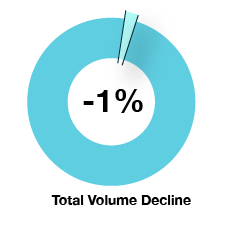
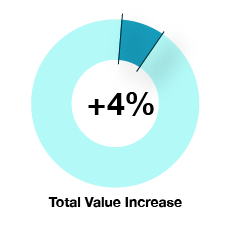
Total beverage alcohol volume declined ~1% in H1 2025, yet value held steady. Spirits captured 42.2% of U.S. revenue (up from 35% a decade earlier). Beer volume declined 1% but value increased 4%. Wine volume fell 4%. Growth pockets: spirits-based RTDs surged ~20%, wine-based RTDs climbed ~14%, NA beer up 18%, tequila/agave grew 2.9% in revenue, super-premium beer rose to 40.7% of total volume.
What This Means for Operations
Assortment complexity is exploding.
Traditional beer, craft, imported, hard seltzer, RTD cocktails, NA beer, NA spirits, wine across every tier, expanding spirits. Managing this within the same footprint requires disciplined planogram management.
Cooler execution drives revenue.
The cooler is the highest-velocity real estate and where brand partners invest the most trade dollars. Compliance directly impacts sales and supplier relationships.
DSD complexity.
The cooler is the highest-velocity real estate and where brand partners invest the most trade dollars. Compliance directly impacts sales and supplier relationships.
Regulatory compliance varies by state.
Chapter 2: Cooler & Shelf Execution
Why Cooler Compliance Matters
Cooler sets are designed with precision — brand positioning, cold shelf share, and adjacencies are negotiated as part of trade agreements. When the cooler drifts, sales velocity drops, brand partners question execution capability, and OOS rates increase.
GoSpotCheck’s image recognition captures coolers, shelves, displays, beer taps, back bars, and beer/wine menus — the most versatile beverage merchandising intelligence available. A team member scans the cooler with a mobile device, identifying every product at SKU level: brand, pack size, facings, position, price, and empty facings. Instant compliance scoring against the planogram with corrective actions.
Seasonal and Promotional Displays
Super Bowl, St. Patrick’s Day, grilling season, holidays — GoSpotCheck task sequences coordinate display setup, signage, pricing verification, and post-event documentation.
Chapter 3: DSD Vendor Management
Unlike center store, the beer aisle is largely vendor-managed. DSD reps order, deliver, and merchandise. Most beverage directors can’t answer with confidence: Is my cooler planogram maintained? Are trade agreements honored? Are new authorizations set timely?
GoSpotCheck enables structured DSD audit tasks: scan coolers with IR, compare against planograms, document discrepancies with photos, aggregate compliance data. This establishes mutual accountability backed by data. Over time, DSD data becomes a strategic asset for negotiations.
Chapter 4: The No/Low Alcohol Opportunity
NA beverages surpassed $1 billion in 2025. NA beer up 18%. NA spirits up 32%. NA RTDs up 36%. Critically, 92% of NA buyers also purchase traditional alcohol — this is the same consumer adding NA options to their repertoire.
The merchandising question: integrated with alcoholic counterparts or dedicated section? Use GoSpotCheck to test approaches by store segment with Place Groups, capture execution photos, and track sales correlation to make data-driven merchandising decisions.
Chapter 5: Regulatory Compliance
Navigating Complexity
No other grocery department faces the regulatory variability of adult beverage. What you can sell (beer only vs. full liquor), how you can display it (cooler restrictions, signage limitations), when you can sell it (time-of-day restrictions), who can sell it (age verification, certification requirements), and what promotions are permissible all vary by state and sometimes by municipality. GoSpotCheck’s Place Groups and conditional logic enable location-specific compliance workflows. Pricing detection captures price points for regulatory verification. Content sharing deploys responsible service training to all team members.
Location-Specific Compliance Workflows
Multi-state retailers manage a patchwork of regulatory requirements from one corporate office. A store in Texas has different display restrictions than a store in Pennsylvania. Some municipalities require specific signage near alcohol displays. Others restrict how close alcohol can be merchandised to store entrances or checkout lanes.
GoSpotCheck’s Place Groups organize stores by regulatory jurisdiction — not just state, but municipality where local ordinances apply. Conditional logic within compliance audit tasks adapts the checklist to each location’s requirements automatically. A store in a state with minimum pricing laws gets pricing verification steps that a store across the border doesn’t. A location subject to display restrictions gets audit questions about product placement relative to entrances or checkout areas. The beverage director builds one compliance program and the platform delivers the right version to every store — no manual tracking of which locations fall under which rules.
Pricing Compliance and Promotional Restrictions
Alcohol pricing is closely regulated in many jurisdictions. Minimum pricing laws, promotional restrictions, volume discount limitations, and pricing parity requirements create compliance obligations that carry real penalties. A well-intentioned promotion that violates a local minimum pricing statute can result in fines or license issues.
GoSpotCheck’s pricing detection capability captures regular and promotional price points from shelf images, enabling systematic pricing audits across all locations. When a new promotion deploys, image recognition can verify whether the posted prices are within regulatory bounds — not just whether the sale sign went up. Over time, this pricing data creates a compliance audit trail that demonstrates the retailer’s diligence in maintaining lawful pricing practices, which is valuable during license renewals and regulatory reviews.
Training, Certification, and Age Verification Documentation
Every team member who handles or sells alcohol needs proper training, and many states require documented certification with renewal on a defined schedule. Keeping track of who is certified, when certifications expire, and whether new hires have completed required training is an operational burden that scales with headcount and turnover — both of which are significant in grocery.
GoSpotCheck’s content sharing capability deploys responsible beverage service training materials directly to team members’ mobile devices, and task management tracks completion. Age verification procedures can be documented as part of daily operational checklists, creating a consistent audit trail that proves the retailer’s commitment to responsible service. When a regulatory body asks for proof that your teams are trained and following proper procedures, the documentation exists — timestamped, location-specific, and organized by team member.
Training, Certification, and Age Verification Documentation
The cumulative effect of location-specific workflows, pricing compliance data, and training documentation is a comprehensive regulatory audit trail that lives in one platform. When a liquor control board conducts an inspection, when a license renewal requires proof of compliance practices, or when a legal team needs documentation for a liability matter, the data is already organized and accessible — not scattered across binders, email threads, and someone’s personal phone photos.
Chapter 6: Labor Optimization & Team Development
Training in a High-Turnover Environment
Produce knowledge is deep — ripeness assessment, proper handling by commodity, rotation protocols, organic requirements, COOL compliance, display techniques. GoSpotCheck’s content sharing embeds training materials directly inside daily tasks. A new hire stocking avocados sees a video on ripeness staging inside the stocking task. Training happens in the flow of work.
Ordering Accuracy: The Upstream Fix
Produce SPLH is the efficiency metric that matters most. Digitized operations create the data to correlate execution quality with financial outcomes and make smarter labor decisions.
Chapter 7: Technology Roadmap

Foundational Operations (Weeks 1–4)
Daily checklists, cooler temp logs, pricing audits, display photos, regulatory compliance tasks. Location-specific workflows via Place Groups.

DSD Intelligence (Months 2–3)
Structured DSD audits with IR for cooler compliance. Photo reporting for trade marketing documentation. Dashboards tracking vendor compliance over time.

Shelf Intelligence (Months 4–6)
IR across coolers, shelves, displays, end caps. SKU-level brand share, pricing, assortment, OOS. Planogram Compliance AI at scale.
Revenue Intelligence (Months 6+)
Conclusion: The Department Is Changing
The adult beverage department is in structural transformation. Consumption shifting, categories fragmenting, NA surging, RTDs disrupting. The retailers who navigate this won’t be the ones with the best assortment strategy on paper — they’ll be the ones who execute consistently on the shelf, in the cooler, and across every location, with the data to prove it.
Walk the Store with Kalliopi
Let me walk your beverage department. Fresh eyes, specific recommendations:
Quick Reference: GoSpotCheck Features for Adult Beverage
| Operational Need | GoSpotCheck Feature | Impact |
|---|---|---|
| Cooler planogram compliance | Planogram Compliance AI + IR | AI-scored cooler compliance |
| Cooler scanning | Image Recognition (Coolers) | SKU-level brand share, facings, pricing |
| Shelf & display scanning | IR (Shelves, Displays) | Full-aisle merchandising intelligence |
| Beer tap detection | Image Recognition (Taps) | Tap handle brand share |
| Back bar analysis | IR (Back Bars) | Brand positioning intelligence |
| Pricing compliance | Pricing Detection | Automated regulatory verification |
| DSD vendor auditing | Task Mgmt + IR + Photo Reporting | Data-driven vendor accountability |
| Trade marketing proof | Photo Reporting + IR Insights | Time-stamped execution documentation |
| Cooler temperature | Bluetooth Thermometer Integration | Automated cold chain compliance |
| Regulatory compliance | Place Groups + Conditional Logic | State-specific workflows |
| Display verification | Photo Reporting | Visual seasonal/promo proof |
| Date/freshness checks | Scheduled Tasks | Recurring beer/wine dating |
| Team training | Content Sharing + In-App Scoring | Responsible service training |
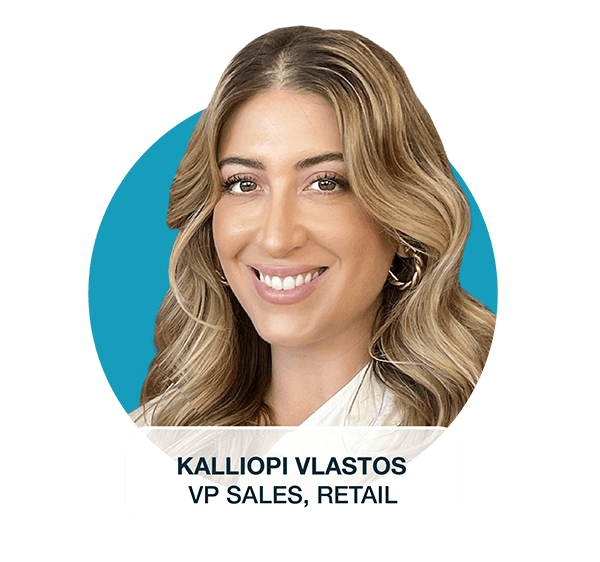
Kalliopi Vlastos is VP of Sales at GoSpotCheck by FORM — the Operational Intelligence Engine for Grocery.